
Fire Protection Standpipe Pressure-Reducing Valve Testing
Fire Protection Standpipe PRV Testing in Miami-Dade County
Florida Fire Solutions provides Fire Protection Standpipe PRV Testing in Miami-Dade County for fire standpipe pressure-reducing valve (PRV) hose outlets that require device-specific regulation testing under flow. We identify the valve model and intended setting or range, measure inlet pressure, outlet pressure and flow together, and document the findings. Call now to request specialized testing.
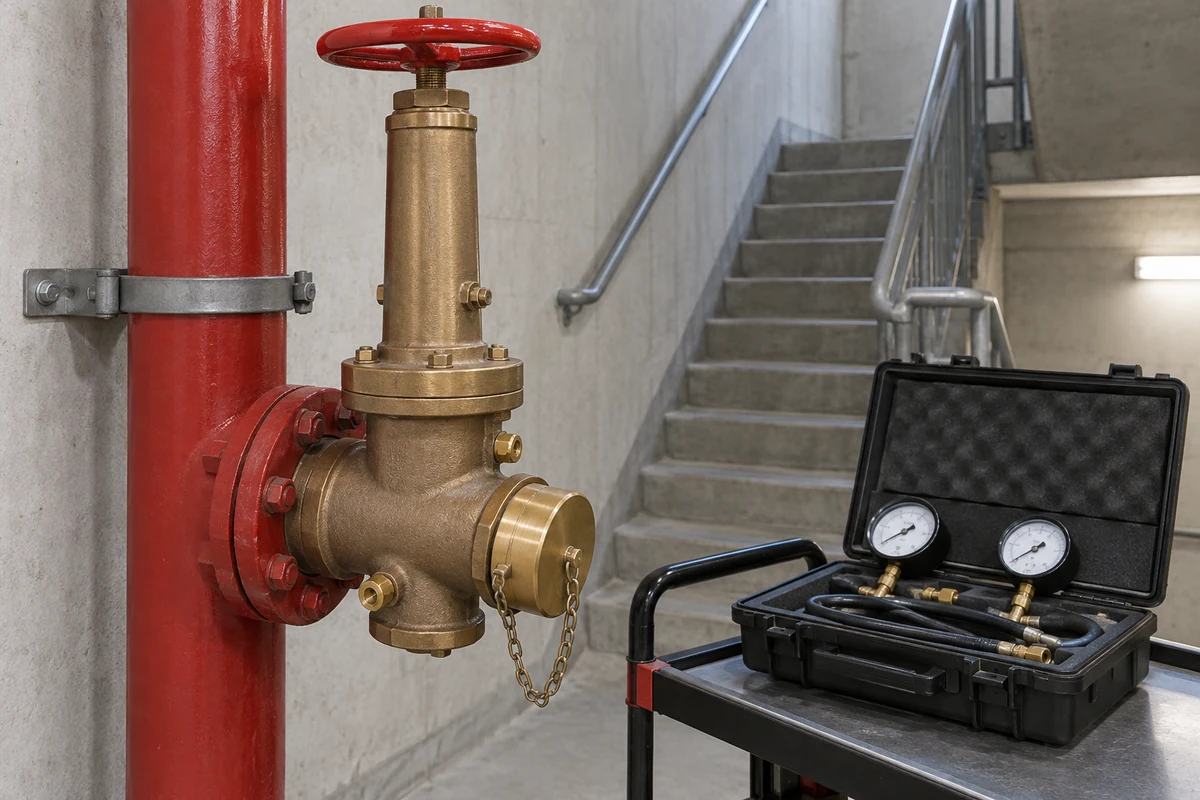
Device-specific fire standpipe testing
Evaluate how the fire standpipe pressure-reducing valve regulates under flow
A pressure-reducing hose valve is intended to control downstream pressure at a fire standpipe outlet. Testing therefore needs to evaluate the valve as a regulating device, not simply record that water flowed from the outlet.
When the pressure problem extends beyond an individual fire standpipe hose-outlet PRV and involves a main or pressure-zone station serving a broader fire protection supply, Fire Protection Master PRV Service in Miami provides a separate station-level scope for model-specific pilot, control-tubing, strainer, main-valve and pressure-regulation evaluation.
When dedicated testing confirms that a fire standpipe pressure-reducing hose valve is failed, nonserviceable or cannot provide its intended regulation after permitted corrective evaluation, Fire Protection Standpipe PRV Replacement in Broward County provides the separate corrective scope for compatible valve selection, qualified replacement and post-installation flow verification.
Florida Fire Solutions reviews the valve manufacturer and model, available setting or range information, inlet and outlet pressure conditions, and measured flow so the regulation result can be tied to the specific fire standpipe PRV being tested. Call now if a Miami-Dade County property needs specialized fire protection standpipe PRV testing.
Regulation under flow
Evaluate inlet pressure, outlet pressure and measured flow together
A fire standpipe pressure-reducing valve test is most useful when the pressure relationship is evaluated at the same time as the measured water flow. Looking at only one reading can miss how the valve behaves as a regulating device.
Inlet pressure
Record the pressure available on the upstream side of the fire standpipe pressure-reducing valve during the applicable test condition so the outlet result has a known inlet reference.
Outlet pressure
Measure the downstream pressure delivered through the pressure-reducing hose valve while water is flowing and compare the result with the valve’s intended performance information.
Measured flow
Document the flow associated with the inlet and outlet pressure readings so the fire standpipe PRV result reflects an actual flowing test condition rather than a static pressure reading alone.
NFPA 25 testing material for pressure-reducing hose valves records flow together with static or residual inlet pressure and residual outlet pressure. That combination supports evaluating whether the device is regulating as intended under the tested condition rather than treating outlet pressure as an isolated number.
Model-specific evaluation
Identify whether the fire standpipe pressure-reducing valve is factory-set or field-adjustable
Pressure-reducing hose valves are not universally adjusted the same way. Some models are factory-set or otherwise nonadjustable in the field, while other designs permit qualified adjustment according to manufacturer instructions.
Valve model and configuration
Identify the installed fire standpipe PRV and available manufacturer information so the test is interpreted against the correct valve design rather than an assumed adjustment method.
Intended setting or range
Review available design, prior test or manufacturer information that establishes the intended regulating condition for the specific hose outlet before drawing conclusions from the measured result.
Qualified correction only when supported
If the test identifies a regulation problem, any permitted adjustment or corrective work follows the specific valve manufacturer’s procedure and the supported findings. A valve is not assumed field-adjustable simply because it is a PRV.
The Zurn ZW4000 is one example of a pressure-reducing fire hose valve with a male hose outlet, factory-set regulator and dedicated inlet and outlet gauge ports for verification. That model demonstrates why valve-specific documentation matters, but its configuration is not assumed for other manufacturers or fire standpipe PRVs.
Different standpipe test scopes
Keep fire standpipe PRV testing separate from general flow and hydrostatic testing
A fire standpipe system can require several different tests. Pressure-reducing valve testing is focused on how a specific regulating hose outlet behaves under flow; general standpipe flow testing and hydrostatic testing answer different questions.
Fire protection standpipe PRV testing
Evaluates a specific pressure-reducing hose valve by considering its inlet pressure, regulated outlet pressure, measured flow and intended device performance together.
Fire standpipe flow testing
Measures water delivery at selected standpipe outlets or system test points. A general flow result does not by itself establish whether an individual pressure-reducing valve is regulating correctly.
Fire standpipe hydrostatic testing
Evaluates pressure integrity of identified fire standpipe piping or a defined section. It does not replace device-specific PRV regulation testing under flow.
If the requirement is general outlet delivery testing rather than device-specific pressure regulation, see our standpipe flow testing in Miami service. If the requirement is pressure integrity of identified piping, see Fire Protection Standpipe Hydrostatic Testing in Broward County.
Documented test result
Document the fire standpipe PRV result before deciding whether correction is needed
The test should produce a clear record of the specific pressure-reducing hose valve, the applicable flowing condition and the measured relationship between inlet pressure, outlet pressure and flow.
- Identify the fire standpipe pressure-reducing valve by location, manufacturer and model when available.
- Record the inlet pressure, outlet pressure and measured flow associated with the qualified flowing test condition.
- Compare the measured behavior with available design, prior-test and manufacturer information applicable to that valve.
- Document whether the findings support continued service, qualified manufacturer-permitted adjustment, further investigation, repair or replacement.
A failed or questionable test result does not automatically mean the complete fire standpipe system is deficient. The finding should remain tied to the tested device and the supporting inlet, outlet and flow data.
Testing is also separate from corrective service. If a valve is found damaged, nonadjustable and unable to provide the intended regulation, or otherwise nonserviceable, repair or replacement should be scoped from the specific valve and manufacturer requirements rather than performed as part of an improvised test adjustment.
Call now to request Fire Protection Standpipe PRV Testing in Miami-Dade County and discuss the valve locations and records available for the test.
Need device-specific testing of fire standpipe pressure-reducing hose valves? Request a PRV test scope for your Miami-Dade County property.
Call (305) 707-3473Common questions
Fire protection standpipe PRV testing questions
What does Fire Protection Standpipe PRV Testing in Miami-Dade County measure?
The test evaluates a fire standpipe pressure-reducing valve under flow by considering the measured flow together with upstream inlet pressure and downstream outlet pressure. The result is compared with the intended performance information available for that specific valve.
Is a PRV the same as an ordinary fire standpipe hose valve?
No. A pressure-reducing valve regulates downstream pressure. An ordinary non-pressure-regulating hose valve provides an outlet without that regulating function. Device-specific PRV testing is intended for the regulating valve.
Can every fire standpipe PRV be adjusted in the field if the test result is wrong?
No. Valve designs vary. Some are factory-set or otherwise nonadjustable in the field, while others permit qualified adjustment under the manufacturer’s procedure. The model and manufacturer information must be identified before any correction is considered.
Is fire standpipe PRV testing the same as a general standpipe flow test?
No. A general standpipe flow test measures system water delivery at selected locations. Fire standpipe PRV testing specifically evaluates how an individual pressure-reducing hose valve regulates outlet pressure while water is flowing.
Does a failed fire standpipe PRV test automatically mean the valve must be replaced?
No. The measured result should be reviewed with the valve model, intended setting or range, inlet pressure, outlet pressure, flow and manufacturer information. The findings determine whether qualified adjustment, further investigation, repair or replacement is the appropriate next scope.
Is testing a hose-outlet PRV the same as testing a master pressure-reducing station?
No. This service focuses on pressure-reducing hose outlet valves at fire standpipe connections. A master or zone pressure-reducing station controls a different part of the fire protection system and requires its own equipment-specific test scope.
Request Fire Protection Standpipe PRV Testing in Miami-Dade County
If fire standpipe pressure-reducing hose valves require specialized regulation testing, contact Florida Fire Solutions to review the valve models, intended performance information and test locations before scheduling the qualified flow evaluation.
Or call directly (305) 707-3473