
Fire Protection Standpipe Pressure-Reducing Valve Service
Fire Protection Standpipe PRV Replacement in Broward County
Florida Fire Solutions provides Fire Protection Standpipe PRV Replacement in Broward County for a confirmed failed or unserviceable pressure-reducing valve (PRV) at a fire standpipe hose outlet. We identify the installed valve and design conditions, evaluate whether manufacturer-permitted service remains practical, and define compatible replacement and qualified post-installation verification. Call now to request a replacement scope.
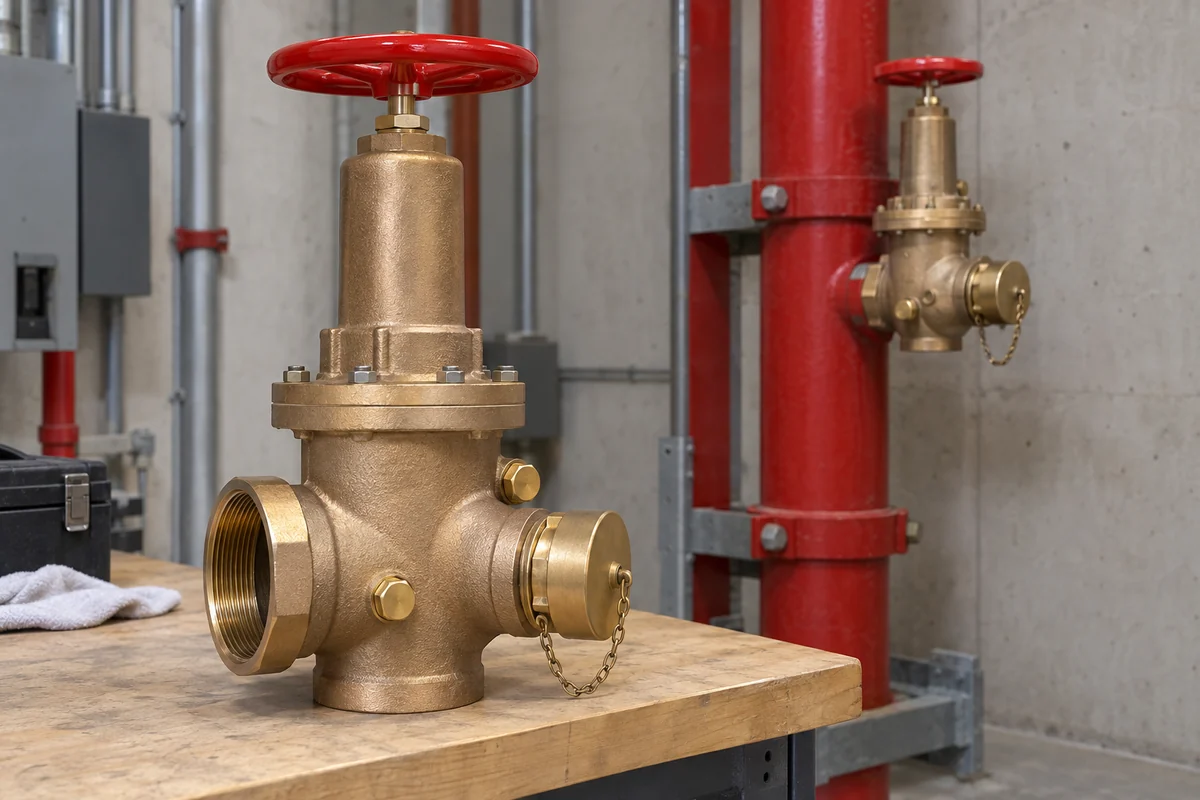
Confirmed regulating-valve failure
Replace a fire standpipe pressure-reducing hose valve when testing and inspection support replacement
A pressure-reducing hose valve should not be replaced simply because one pressure reading appears unusual. The corrective scope begins with the specific valve, its condition, its intended regulation duty and the findings showing that the device is failed, damaged, nonserviceable or no longer capable of providing the required regulating function.
Florida Fire Solutions reviews the valve model, available prior test data, inlet condition, intended outlet pressure and flow information, physical condition, connection type and manufacturer documentation before specifying replacement. Call now when a fire protection standpipe PRV in Broward County has a documented failure and needs a qualified corrective scope.
Replacement compatibility
Identify the fire standpipe PRV from its actual regulating and connection requirements
A replacement pressure-reducing valve must match more than the physical size of the old valve. The regulating duty, inlet condition, downstream design requirement, connection arrangement and manufacturer-specific installation requirements all matter.
Valve model and regulating function
Identify the existing fire standpipe PRV and determine how that valve is intended to regulate the hose outlet so the replacement is selected for the same supported fire protection function.
Inlet pressure and outlet design condition
Review available inlet-pressure information together with the intended downstream pressure and flow requirements for the outlet. Replacement selection is based on the actual fire standpipe design information rather than one universal pressure value.
Connections and installation clearance
Confirm inlet and outlet connection type, hose outlet configuration, available space, orientation and access needed for the replacement valve and future qualified inspection or testing.
Manufacturer pressure-reducing valve families can use different connection arrangements and regulating configurations. Equipment selection therefore follows the installed fire standpipe outlet and the manufacturer information applicable to the proposed replacement rather than visual similarity alone.
Repair before replacement
Evaluate manufacturer-permitted service before replacing the complete fire standpipe PRV
A failed test or visible deficiency does not always mean the complete pressure-reducing valve must be discarded. The valve model and manufacturer documentation determine whether qualified internal service, repair components or other corrective work remain appropriate.
Serviceable internal condition
Review whether the installed valve family has manufacturer-supported repair components or maintenance procedures applicable to the confirmed fault before complete replacement is selected.
Factory-set pressure-reducing valves
Some fire protection PRVs are supplied with factory-set pressure regulation and are not intended for field setting changes. Corrective decisions for those models follow their manufacturer documentation and the actual test findings.
Field-adjustable pressure-reducing valves
Other valve families permit qualified field adjustment. An adjustment-capable model should still be evaluated under its manufacturer procedure before deciding that replacement is necessary.
Current Zurn fire-protection valve literature provides an example of this difference: the ZW4004 family is factory-set, while other Zurn pressure-reducing valve families are identified as field-adjustable. The installed model therefore has to be identified before anyone assumes that adjustment is available or appropriate.
Correct equipment and service
Keep fire standpipe PRV replacement separate from other valve and test scopes
This service replaces a confirmed failed or unserviceable pressure-reducing hose outlet valve. Similar-looking fire protection components can have different functions and should not be combined into the same corrective scope.
Ordinary non-regulating hose valve
A standard fire standpipe hose outlet valve does not provide the same pressure-reducing function. Replacing an ordinary hose valve is a different corrective job with different equipment requirements.
PRV test-only evaluation
Device-specific testing evaluates inlet pressure, outlet pressure and flow to determine how the regulating valve performs. Replacement begins only when the findings support a corrective replacement scope.
Master pressure-reducing station or fire pump relief valve
A master or zone pressure-reducing station controls a different portion of the fire protection system, while a fire pump pressure relief valve serves pump-discharge pressure control. Neither is the hose-outlet PRV addressed by this service.
When the problem is still diagnostic rather than a confirmed valve failure, qualified testing should establish the regulating condition before replacement is specified. This prevents an outlet-pressure complaint from automatically becoming a valve-replacement project without supporting test or inspection findings.
Qualified corrective replacement
Coordinate the fire standpipe impairment, replace the PRV and verify regulation under relevant flow conditions
Once replacement is supported, Florida Fire Solutions defines the work around the specific pressure-reducing hose valve, its connections and the affected fire standpipe section.
- Document the confirmed pressure-reducing valve deficiency and why service or adjustment is not the selected corrective path.
- Confirm the replacement valve model, regulating requirements, connections and applicable installation information.
- Coordinate authorized access and the affected fire protection impairment before replacement work begins.
- Install the compatible replacement and complete qualified post-installation verification appropriate to the valve and fire standpipe system.
Manufacturer guidance for pressure-reducing valves calls for performance verification after installation under the applicable flowing conditions. For a replacement hose-outlet PRV, that means the completed work should be checked against the installed valve’s intended regulating duty rather than accepted solely because the new valve is physically installed.
Qualified post-installation verification can include the relevant inlet pressure, outlet pressure and flow information needed to confirm the replacement valve is operating consistently with the applicable design and manufacturer requirements. No universal pressure value or field-setting procedure is assumed.
Call now to request Fire Protection Standpipe PRV Replacement in Broward County after testing or inspection has identified a failed or nonserviceable regulating hose valve.
Confirmed failed or unserviceable fire standpipe pressure-reducing hose valve? Request a qualified replacement scope in Broward County.
Call (305) 707-3473Common questions
Fire protection standpipe PRV replacement questions
What does Fire Protection Standpipe PRV Replacement in Broward County cover?
The service addresses a confirmed failed or unserviceable pressure-reducing valve at a fire standpipe hose outlet. It includes identifying the applicable replacement requirements, coordinating the affected impairment, replacing the valve and performing qualified post-installation verification.
Does every failed fire standpipe PRV test require replacement?
No. The valve model, test findings and manufacturer documentation should be reviewed first. Some conditions can support manufacturer-permitted service or qualified adjustment, while a damaged, nonserviceable or otherwise failed valve can require replacement.
Can every fire standpipe pressure-reducing valve be adjusted in the field?
No. Valve designs vary. Some pressure-reducing valve families are factory-set, while others permit qualified field adjustment according to manufacturer procedures. The installed valve model must be identified before adjustment is considered.
Is fire standpipe PRV replacement the same as ordinary hose valve replacement?
No. A PRV regulates downstream pressure and must be selected for the applicable regulating duty. An ordinary non-pressure-regulating hose valve does not perform that same function.
What information is needed before choosing the replacement PRV?
Useful information includes the existing valve manufacturer and model, inlet and outlet connection arrangement, prior test results, available inlet pressure, intended outlet pressure and flow information, outlet location and the documented condition supporting replacement.
How is a replacement fire standpipe PRV checked after installation?
Qualified verification follows the installed valve and fire standpipe design. It can include the relevant inlet pressure, outlet pressure and flow observations needed to confirm that the replacement pressure-reducing valve performs consistently with the applicable design and manufacturer information.
Request Fire Protection Standpipe PRV Replacement in Broward County
If testing or inspection has confirmed a failed or unserviceable pressure-reducing hose valve, contact Florida Fire Solutions to evaluate serviceability, identify the compatible replacement and define the qualified installation and verification scope.
Or call directly (305) 707-3473