
Standpipe Pressure Diagnostics • Miami-Dade County
Fire Protection Standpipe Pressure Troubleshooting in Miami-Dade County
Florida Fire Solutions provides Fire Protection Standpipe Pressure Troubleshooting in Miami-Dade County to investigate abnormal pressure conditions across a standpipe system or supplying zone and identify the corrective scope.
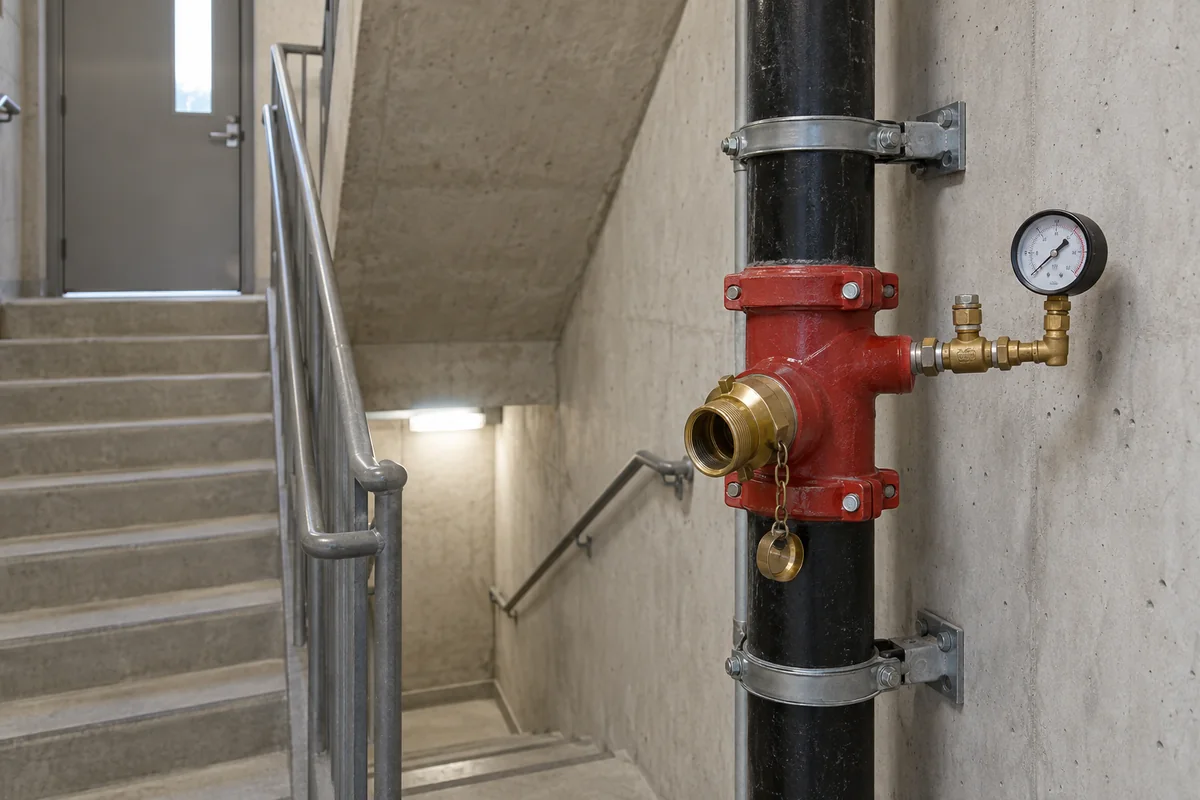
System and zone diagnosis
Investigate why standpipe pressure is abnormal before selecting the repair
Florida Fire Solutions provides Fire Protection Standpipe Pressure Troubleshooting in Miami-Dade County when selected hose outlets or an identified standpipe zone show low, high, inconsistent, or otherwise abnormal pressure and the cause has not yet been isolated.
The diagnostic scope looks beyond one device. Depending on the system and reported condition, the investigation can compare observations at selected locations and review the supplying zone, accessible valve conditions, pressure-regulating equipment, available system information, and other components relevant to the pressure path.
Call now to request a standpipe pressure diagnostic visit in Miami-Dade County.
For broader commercial inspection, testing, repair, and maintenance capabilities, review our fire protection services.
Pressure complaints
Standpipe pressure conditions that may need diagnosis
The same pressure symptom can have different causes. Troubleshooting is used when the corrective work is not yet clear from the complaint or initial inspection finding.
Lower-than-expected pressure
A low reading or weak pressure condition at a selected hose outlet can require review of the supplying zone, accessible valves, regulating equipment, available supply information, and other conditions along the pressure path.
Higher-than-expected pressure
An unexpectedly high condition should be evaluated against the actual system arrangement, zone, pressure-regulating components, and applicable design information rather than corrected by guessing at one valve.
Pressure that varies by floor or zone
Differences between selected locations can help narrow the investigation toward a zone-specific component, supply path, regulating device, valve condition, or another localized part of the standpipe arrangement.
A pressure complaint alone does not establish which component has failed. The purpose of troubleshooting is to collect enough system-specific information to identify the likely cause and define the next corrective step.
Diagnostic scope
Trace the pressure condition through the relevant standpipe zone
The diagnostic approach is adapted to the actual building and complaint. It can involve reviewing pressure observations at selected locations and tracing the components that influence those points.
- Identify the outlets, floors, risers, or zones where the abnormal pressure condition was reported or documented.
- Review available inspection reports, prior test information, drawings, deficiency notes, and equipment records that help establish the expected system arrangement.
- Compare relevant pressure observations at selected points when needed to determine whether the problem is isolated or extends through a larger portion of the zone.
- Review accessible valves, pressure-regulating equipment, zone interfaces, and supplying components relevant to the diagnosed pressure path.
- Document the observed condition and identify the corrective work or additional testing indicated by the diagnostic findings.
The diagnostic visit does not assume that a PRV, fire pump, valve, or piping section needs replacement before the system is evaluated. If a specific component is identified as the source, the appropriate repair or device-specific service can then be scoped separately.
To investigate an unexplained standpipe pressure condition, call for a diagnostic visit.
Different diagnostic and testing scopes
Pressure troubleshooting is not a renamed flow or PRV test
Troubleshooting begins with an unexplained pressure problem. Scheduled testing begins with a known testing requirement and defined test procedure. Keeping those scopes separate makes the resulting service and documentation clearer.
Pressure troubleshooting
This page covers diagnosis of an abnormal system or zone pressure condition when the source has not yet been isolated.
Standpipe flow testing
Flow testing evaluates water delivery at selected standpipe outlets under an established test scope. See our Standpipe Flow Testing in Miami service when scheduled flow measurement is the job being requested.
Standpipe PRV testing
PRV testing evaluates the performance of an identified pressure-reducing valve under its applicable test procedure. See Fire Protection Standpipe PRV Testing in Miami-Dade County when the device-specific test is already the required scope.
If troubleshooting identifies a broader pressure-regulation issue rather than one outlet device, the corrective scope may also involve equipment elsewhere in the pressure-control arrangement. Our Fire Protection Master PRV Service in Miami page covers that separate component category.
Common questions
Questions about standpipe pressure troubleshooting
What does standpipe pressure troubleshooting investigate?
The service investigates an abnormal pressure condition at selected outlets, floors, risers, or zones and traces the relevant system arrangement to identify the likely source and corrective scope.
Does low pressure automatically mean the PRV is bad?
No. An abnormal pressure condition can involve different parts of the system or supplying zone. Troubleshooting is intended to identify the likely source before a specific valve or component is selected for repair or replacement.
Is pressure troubleshooting the same as standpipe flow testing?
No. A scheduled flow test measures system performance under an established procedure. Troubleshooting begins with an unexplained pressure complaint and uses targeted observations and system review to determine where the problem is coming from.
Is this the same as testing every pressure-reducing valve?
No. Device-specific PRV testing is a separate service. Pressure troubleshooting may identify a PRV as one possible part of the diagnostic path, but it does not automatically turn the visit into a scheduled test of every regulating valve.
What information should I provide before the diagnostic visit?
Provide the Miami-Dade County property location, the floors or outlets where the pressure issue was observed, any available readings or prior test reports, inspection deficiencies, drawings, and information about when the condition occurs.
Does the diagnostic visit include the final repair?
Not automatically. The purpose of the diagnostic visit is to identify the likely cause and define the corrective scope. Repair or additional testing can then be quoted according to the component and work actually required.
Request Standpipe Pressure Troubleshooting in Miami-Dade County
If a standpipe outlet or zone is showing unexplained low, high, or inconsistent pressure, contact Florida Fire Solutions to review the condition and identify the next corrective scope.
Or call directly (305) 707-3473