
Private Fire Protection Water Systems
Private Fire Hydrant Repair in Miami-Dade County
Florida Fire Solutions repairs identified operating and hardware defects on privately owned fire hydrants in Miami-Dade County when the existing hydrant assembly can remain in service and a compatible repair scope is appropriate.
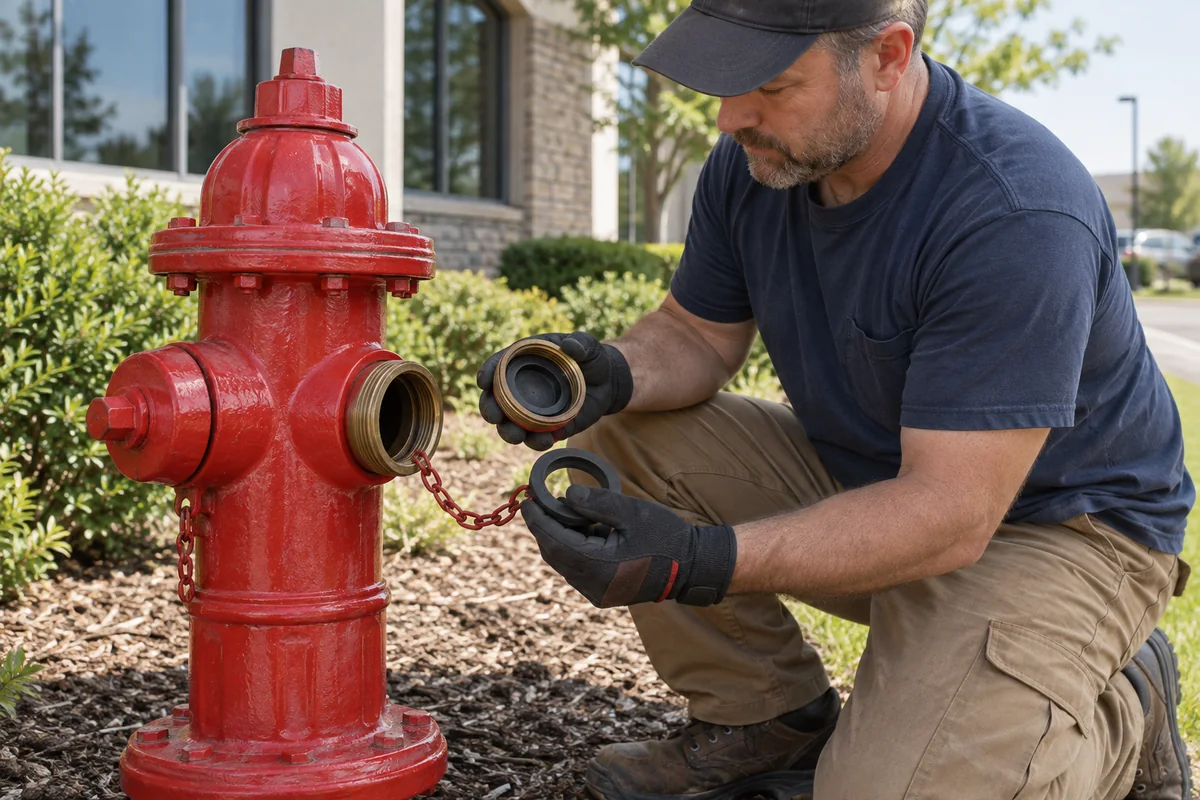
Repair the identified defect
Correct problems on a private fire hydrant that is being retained
Florida Fire Solutions provides Private Fire Hydrant Repair in Miami-Dade County for privately owned hydrants serving a property’s fire protection water system. The service is intended for an identified hydrant assembly with a hardware, sealing or operating defect that can be addressed without automatically replacing the entire hydrant.
A repair begins with the actual hydrant in front of us. The assembly, visible markings, configuration and reported defect help determine whether the existing hydrant can be retained and what compatible parts or service steps are appropriate. We do not treat every leaking cap, difficult operating mechanism or worn component as the same repair.
Call now to discuss the private fire hydrant defect, what has already been observed and any inspection findings available for the hydrant.
For broader private fire-main, fire hydrant and water-based system work, review our fire protection services.
Common repair conditions
Private fire hydrant defects that may lead to a repair scope
The specific repair depends on the hydrant design and the defect found. The objective is to correct the affected component while retaining the existing assembly when its condition and available parts support that approach.
Leaking outlet caps or gaskets
A damaged gasket, sealing surface or cap-related issue may allow leakage at an outlet. The cap, gasket and mating surfaces are evaluated before deciding what should be replaced or corrected.
Operating mechanism problems
A hydrant that is unusually difficult to operate, does not move as expected or shows wear around the operating hardware may require evaluation of the affected retained components.
Packing, seals and gasket defects
Leakage around joints, stems or serviceable sealing components can require replacement of compatible seals, packing or gaskets after the source of the defect is identified.
Worn or damaged external hardware
Caps, chains and other accessible hydrant hardware can become damaged, missing or difficult to use. The correct repair depends on the identified hydrant and compatible replacement components.
Localized serviceable component defects
Some hydrant problems are limited to a replaceable component rather than the entire assembly. The repair scope is based on what can be confirmed on the actual hydrant.
Previously documented deficiencies
If a prior inspection has already identified a specific private fire hydrant defect, that documentation can help define the corrective work and reduce uncertainty before parts are selected.
If the condition has not yet been evaluated and the property first needs the hydrant documented, see our private fire hydrant inspection service. Inspection and repair are separate scopes so a deficiency can be identified before corrective work is authorized.
Call now when you already have a private hydrant deficiency and need the repair scope evaluated.
Assembly identification
The hydrant must be identified before compatible repair parts are selected
Private fire hydrants are not interchangeable assemblies. Manufacturer, model family, configuration, age, visible markings and the components installed on the hydrant can affect what repair parts fit and whether a component-level repair is practical.
Florida Fire Solutions evaluates the identified hydrant rather than assuming that a generic cap, gasket, stem component or internal part will fit. Photos, casting marks, existing inspection records and information visible during the site review can help establish the assembly before parts are ordered or corrective work begins.
- Confirm that the hydrant is privately owned and within the property’s fire protection scope.
- Identify the hydrant assembly and the component associated with the reported defect.
- Evaluate whether compatible repair parts are available for the existing assembly.
- Separate a localized component repair from conditions that indicate a broader hydrant problem.
- Define the corrective scope before representing the work as a repair rather than a replacement.
Do not disassemble or operate fire protection equipment as a DIY repair
Private fire hydrants are part of the property’s fire protection water system. Operating, isolating or disassembling hydrant components can affect system readiness and should be handled with the required site coordination rather than used as a trial-and-error repair method.
Corrective work
Build the repair around the identified defect and existing hydrant
Once the hydrant and defect are understood, the corrective scope can be matched to the component that requires service rather than replacing unrelated parts.
The work may include removal of the affected serviceable component, replacement of compatible gaskets or hardware, correction of a localized sealing or operating problem, reassembly and appropriate follow-up checks based on the repair performed. The exact steps vary by hydrant design and what is found during the work.
A component repair can also reveal additional deterioration that was not visible before disassembly. If the condition discovered changes the repair approach, the expanded issue should be documented rather than silently treated as part of an assumed fixed scope.
Confirm the affected component
The reported deficiency is compared with the actual hydrant condition so the repair targets the component causing the problem.
Use compatible replacement parts
Replacement hardware and sealing components are selected around the identified hydrant rather than treated as universally interchangeable parts.
Perform appropriate post-repair checks
After corrective work, the repaired area and affected operation are checked as appropriate for the actual repair and hydrant configuration. Post-repair checks follow the criteria appropriate to the actual hydrant, the repaired component and the work performed.
The completed repair should leave the property with a clear record of what was corrected and whether another condition was observed that requires additional work.
Call now to request a repair evaluation for an identified private fire hydrant defect in Miami-Dade County.
Repair versus replacement
Some hydrant conditions require more than a component repair
The purpose of this service is to repair retained hydrant hardware when that approach is appropriate. It is not a promise that every damaged private fire hydrant can or should be rebuilt in place.
Severe body damage, extensive deterioration, an unsuitable or nonserviceable assembly, unavailable compatible components or defects extending beyond the initially identified hardware can change the recommended scope. In those situations, complete hydrant replacement or other fire-main work may need to be evaluated separately.
Keeping repair and replacement distinct helps the property understand what is actually being corrected. A small component deficiency should not automatically become a full replacement, while a hydrant with broader problems should not be represented as resolved by changing one visible part.
Florida Fire Solutions’ broader fire protection services can be used to coordinate related private fire-main or water-based system work when the issue extends beyond the retained hydrant hardware.
Common questions
Private fire hydrant repair questions
Can a leaking private fire hydrant be repaired without replacing the entire hydrant?
Sometimes. If the problem is limited to a serviceable cap, gasket, seal, operating component or other compatible retained hardware, a localized repair may be appropriate. The actual hydrant and defect need to be evaluated before that determination is made.
How do you determine which parts fit an existing private fire hydrant?
The hydrant is identified using the available manufacturer information, markings, configuration, records and visible components. Parts are then selected for compatibility with the identified assembly rather than assumed to be universal.
Is repair included with a private fire hydrant inspection?
No. Inspection documents condition and identified deficiencies. Corrective repair is a separate scope so the work can be based on the actual defect, hydrant assembly and required parts.
What happens after the private fire hydrant is repaired?
The repaired component and affected hydrant function are checked as appropriate for the work performed and the specific hydrant configuration. The necessary follow-up depends on the defect and repair rather than one universal procedure or test value for every hydrant.
When might complete hydrant replacement be needed instead?
Replacement may need to be evaluated when damage or deterioration extends beyond a practical component repair, compatible service parts are not available, or the existing assembly has broader problems that cannot be corrected by repairing the identified hardware. Replacement is a separate scope.
Do you repair municipal or city-owned fire hydrants?
This service is for privately owned fire hydrants within a property’s fire protection system. Public, municipal or utility-owned hydrants are outside the scope represented on this page.
Need a private fire hydrant repaired in Miami-Dade County?
Florida Fire Solutions can evaluate the identified hydrant assembly, confirm the corrective scope and repair compatible retained components when component-level repair is appropriate.
Or call directly (305) 707-3473