
Fire Pump Diagnostic Service
Fire Pump Performance Troubleshooting in Miami-Dade County
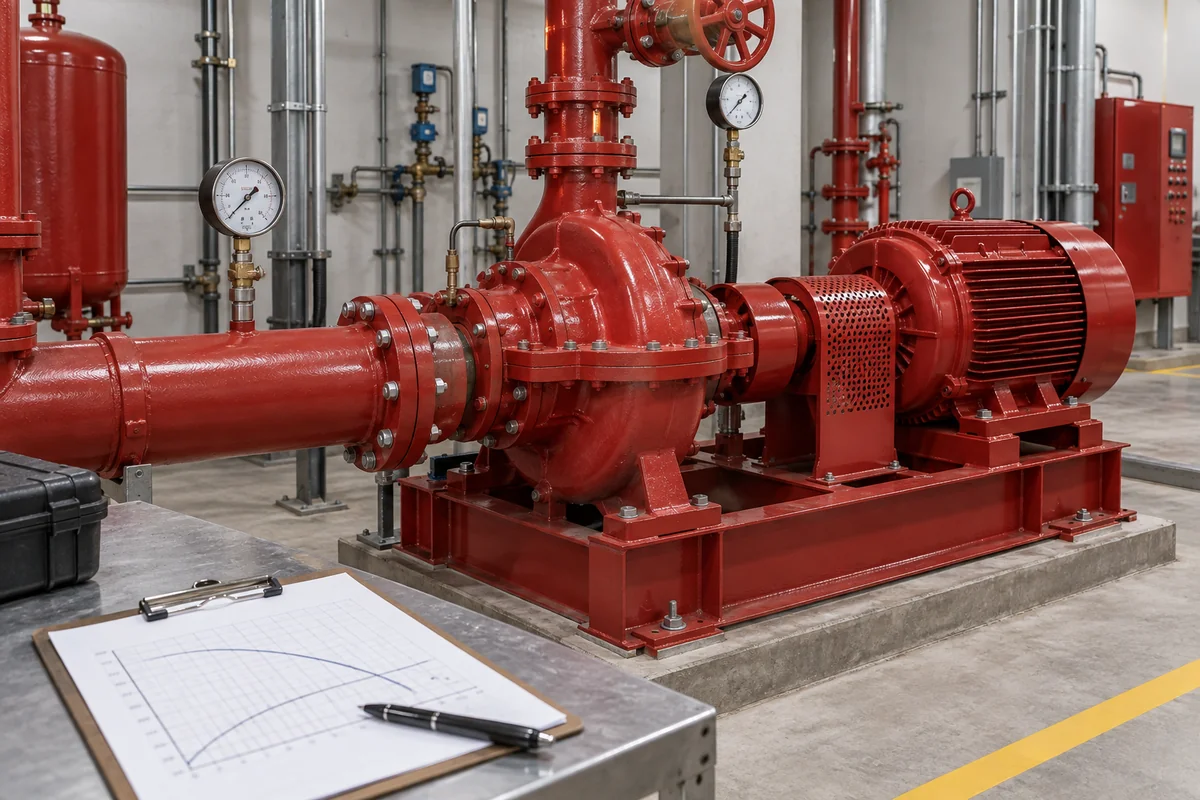
Florida Fire Solutions provides Fire Pump Performance Troubleshooting in Miami-Dade County when a fire pump has produced a failed or adverse performance-test result. We review the recorded test data and pump curve, investigate supply, speed, valve and confirmed mechanical causes, and define the next corrective step. Call now to schedule a focused diagnostic follow-up.
Post-test investigation
A failed performance result is the starting point—not the diagnosis
When a fire pump records lower pressure, flow, or overall performance than expected, the next question is why. Florida Fire Solutions follows the measured result with a focused investigation so corrections are based on evidence rather than replacing parts by assumption.
The diagnostic review starts with the test report, pump identification and available manufacturer performance curve. We then look at whether the test setup is comparable with prior or reference data, what happened to suction and discharge conditions during the test, whether driver speed was consistent with the comparison being made, and whether field findings point to a pump or component problem. Call now if you have an adverse fire pump test result and need the cause narrowed down before repairs are specified.
Start with the data
Make sure the result is being compared on a meaningful basis
Performance troubleshooting is different from simply repeating the measurements. The investigation asks whether the recorded result can be fairly compared with the original pump curve, prior field tests, and the conditions that existed during the test.
Recorded flow and pressures
Review the measured flow, suction pressure, discharge pressure and calculated pump performance across the documented test points. Changes in suction supply can affect the apparent result and should be separated from a pump-side loss of performance.
Driver speed
Compare recorded driver speed with the reference information used to judge pump performance. A speed difference can change the measured output and may require the data to be evaluated on a comparable basis.
Test setup and flow path
Review the test method, measuring equipment, documented valve arrangement and flow path, and whether the setup differs materially from the reference or prior test. A noncomparable setup can point the investigation in the wrong direction.
NFPA fire pump test guidance uses flow, suction pressure, discharge pressure and speed as key test information and illustrates performance data compared with original or manufacturer curves. That same evidence is useful after an adverse result because it helps distinguish a changed water supply or test condition from degradation within the pump or driver.
If the immediate need is to obtain the measurements rather than investigate an adverse result, see our fire pump flow testing in Miami service.
Cause isolation
Separate supply, speed, valve and mechanical causes before choosing a repair
Several different conditions can produce a similar-looking performance problem. The diagnostic work narrows those possibilities using the test record, equipment information and qualified field findings.
Suction and water-supply conditions
Compare suction behavior during the failed test with prior or reference conditions. A reduced available supply can lower discharge performance even when the pump itself has not experienced the same degree of mechanical degradation.
Driver and speed findings
Confirm the recorded speed and review relevant driver or controller findings when the pump was not operating at the speed expected for the comparison. The corrective path can differ from a pump-internal repair.
Valve and test-path conditions
Evaluate whether valve conditions, restrictions or the documented test flow path could have influenced the measured result. Findings are tied to the actual system configuration rather than assumed from the pressure reading alone.
Pump and mechanical condition
When the evidence points toward the pump, the investigation can focus on confirmed mechanical findings involving components such as the impeller, wear components, coupling or alignment, bearings, packing or other model-specific parts.
Industry troubleshooting guidance for centrifugal fire pumps identifies possible causes across the suction system, pump, driver and alignment—not a single universal explanation for low discharge pressure or insufficient flow. That is why a documented adverse test result should be investigated before the corrective work is finalized.
If the problem is already known and the property needs corrective work rather than diagnosis, our fire pump repair in Miami service covers broader repair needs. Call now when the cause is still unclear and the failed performance result needs a focused follow-up investigation.
From finding to correction
Turn the diagnostic findings into a defined corrective scope
The goal of troubleshooting is not just to identify possible causes. It is to narrow the evidence enough to recommend the next repair, supply-side review, driver correction, component inspection or other action and then define how performance should be verified afterward.
- Document the test result and the reference curve or prior data used for comparison.
- Identify which supply, speed, test-path or mechanical findings are supported by the available records and field review.
- Define the corrective work that follows from the confirmed cause rather than applying a generic fire pump repair scope.
- Recommend the applicable follow-up performance verification or retest after corrective work is complete.
If internal wear or pump condition is confirmed to the point that overhaul becomes the appropriate corrective path, see our fire pump rebuilding in Miami service. Rebuilding is not assumed from a failed test alone; it follows only when the diagnostic evidence supports that level of repair.
Have a fire pump test report showing an adverse result? Request a focused diagnostic review before specifying the repair.
Call (305) 707-3473Common questions
Fire pump performance troubleshooting questions
Is performance troubleshooting the same as a fire pump flow test?
No. Flow testing produces the measurements. Performance troubleshooting begins when those measurements show an adverse or unexplained result and the cause has to be separated among test conditions, water supply, speed, valve or flow-path conditions, and confirmed mechanical findings.
What should I send before the diagnostic visit?
Send the most recent test report, previous comparable reports if available, the fire pump nameplate information, the manufacturer or certified performance curve, and notes about recent work or changes affecting the pump, driver, controller or water supply.
Does a failed performance test automatically mean the fire pump needs rebuilding?
No. A poor measured result can have more than one cause. The investigation first checks the supporting data and conditions so a supply problem, speed issue, test-path condition or other cause is not mistaken for internal pump wear.
Can you determine whether suction conditions affected the result?
The diagnostic review compares recorded suction behavior with the discharge and flow data and, when available, prior comparable tests. That can help determine whether a change in available water supply contributed to the adverse result and whether additional supply-side investigation is warranted.
What do I receive after the troubleshooting investigation?
The service is intended to identify the supported cause or next diagnostic step, define the corrective scope that follows from the findings, and recommend the applicable performance verification or retest after corrections are completed.
Request a Fire Pump Performance Diagnostic Review
If a fire pump in Miami-Dade County has produced an adverse performance-test result, send the test records and pump information so Florida Fire Solutions can focus the next investigation on the most relevant causes.
Or call directly (305) 707-3473