
Planned no-flow fire pump operational testing
Fire Pump Churn Testing in Broward County
Florida Fire Solutions provides fire pump churn testing in Broward County for planned no-flow operating checks, recording equipment observations and test findings so abnormal conditions can be identified for the appropriate next step.
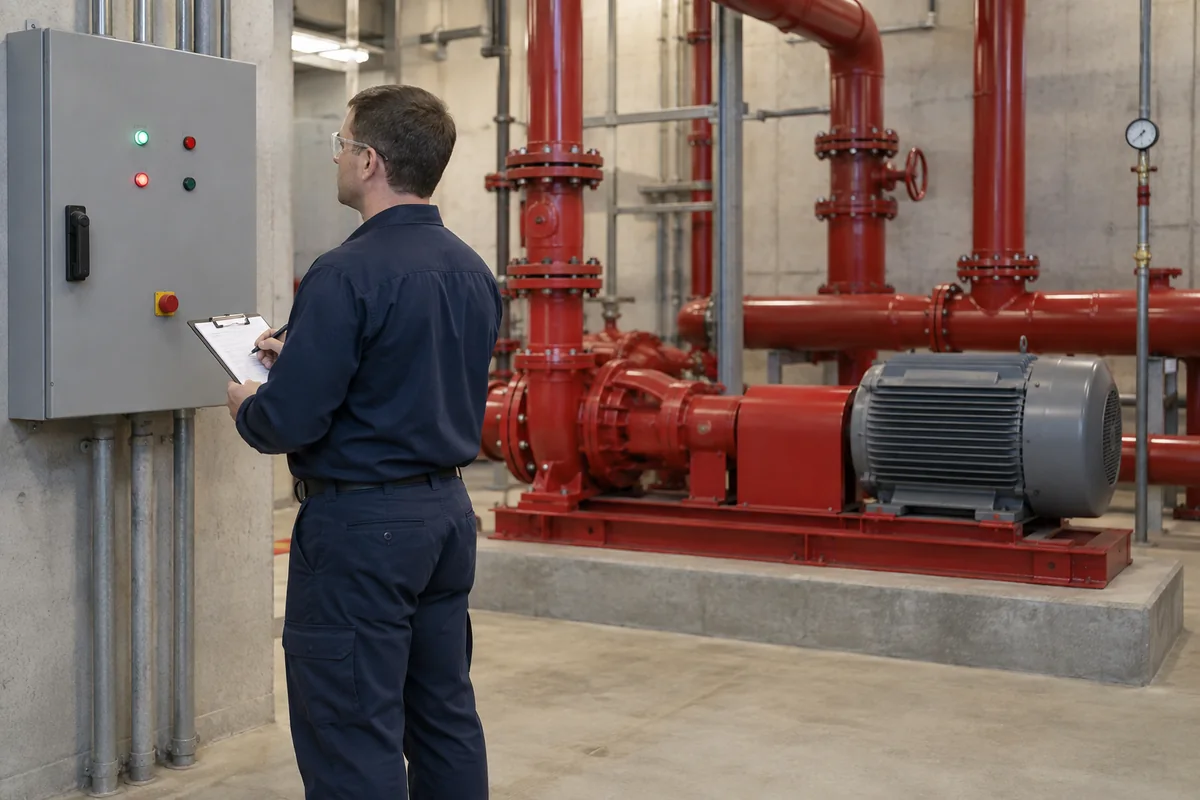
Routine no-flow operation check
Run the fire pump at churn and document how the equipment operates
Florida Fire Solutions provides Fire Pump Churn Testing in Broward County for existing fire pumps that need a planned no-flow operating check with recorded observations and clear follow-up when something appears abnormal.
A churn test is a no-flow fire pump test. The pump is operated without the measured discharge-flow points used for a full performance test, while the technician observes the pump, driver, controller, gauges and related equipment included in the agreed scope.
The purpose is to document operating condition during the no-flow test and identify concerns that need additional investigation. A churn test does not by itself establish that the pump can deliver its rated flow performance under load.
Call now to schedule a churn test or review the pump information before the visit. For broader inspection, testing, maintenance and repair needs, see our Fire Pump Services in Broward County.
Equipment-specific readiness
Prepare the correct pump, records and building contact for the test
No-flow testing should be tied to the actual fire pump installation. Identifying the equipment and existing records before the visit helps keep observations connected to the correct pump and avoids treating every pump room as the same setup.
Identify the pump and driver
Provide available pump and driver nameplate information, equipment schedules or clear photos. If the building has more than one fire pump, identify which unit is included in the churn-testing request.
Provide previous records
Send the most recent churn, flow-performance or service records when they are available. Earlier observations can help show whether a pressure reading, controller indication or operating condition has changed.
Coordinate pump-room access
Identify the authorized property, facilities or engineering contact who can provide pump-room access and answer questions about previous tests, known alarms or recent work on the equipment.
If the pump is already impaired, unavailable or known to have a serious operating problem, tell Florida Fire Solutions before the appointment. An abnormal or impaired condition can require a different service plan than a routine no-flow test.
Recorded operating observations
Document what the pump, driver and controller are doing during the no-flow test
The churn-testing record should identify the equipment tested and capture the operating observations that matter for that installation without turning the no-flow check into a substitute for full flow-performance testing.
- Pump identification: record the fire pump and driver associated with the test so findings remain tied to the correct equipment.
- Pressure observations: record applicable gauge readings used for the no-flow test and compare them with available reference or previous test information where appropriate.
- Controller condition: observe the controller indications, alarms or other operating information included in the agreed test scope without opening or altering equipment solely for routine intake.
- Driver and pump operation: note abnormal noise, vibration, leakage, overheating concerns or other visible or audible conditions that appear during the test.
- Related equipment observations: document other pump-room conditions included in the service scope when they affect the test record or indicate a separate maintenance concern.
- Test findings: record normal observations, abnormalities and items that need additional investigation or a separately scoped repair or performance test.
NFPA 25 technical-development material distinguishes a no-flow or churn test from flow testing at rated operating points. That distinction matters because a pump can be observed running at churn without the test establishing its full flow-performance capability.
Call now if you have previous fire pump records and want the current churn findings documented against the equipment history available for the property.
Abnormal findings and next steps
Use the churn test to identify follow-up, not to overstate what was proven
A no-flow test can reveal an abnormal operating condition, but the next step depends on what was observed. Some findings need maintenance or repair assessment; others can justify a separate measured flow-performance test.
Abnormal operating condition
If the technician observes unusual pressure behavior, leakage, vibration, noise, controller indications or another concern, document the condition and identify the appropriate service follow-up instead of treating the churn test as a completed diagnosis.
Separate flow-performance testing
When the question is whether the existing pump can produce the expected pressure and flow under load, a measured flow-performance test is a separate scope. Churn observations alone do not establish rated-flow performance.
Separate acceptance testing
Acceptance testing for a new or replacement fire pump project is also a separate service. It is tied to project readiness, installation information, project testing requirements and closeout rather than routine no-flow operation of an existing pump.
For broader recurring fire protection inspection coordination, Florida Fire Solutions also provides annual and quarterly fire sprinkler inspections. Pump-specific findings should remain clearly identified within the property’s larger fire protection record.
If a churn test produces an abnormal finding, Florida Fire Solutions can review whether the next job is maintenance, repair assessment or a separate performance test. The test record should show what was observed without promising that one no-flow test proves every aspect of pump performance.
Common questions
Questions before scheduling fire pump churn testing
What is a fire pump churn test?
A churn test is a planned no-flow operating test of an existing fire pump. The technician observes how the pump, driver, controller, gauges and related equipment operate during the agreed test scope and records findings for the property.
Does a churn test prove the fire pump can deliver full rated flow?
No. A churn test is performed at a no-flow operating condition. Measured flow-performance testing uses separate flowing test points to evaluate pump performance under load, so churn results should not be presented as proof of full rated-flow capability.
What information should I provide before the test?
Provide the property address, building contact, pump-room access information, pump and driver identification, controller information, previous pump test records if available, and any known operating concern that should be noted before the visit.
What happens if the churn test shows an abnormal condition?
The condition should be documented and reviewed for the appropriate next step. Depending on the finding, that can mean maintenance, repair assessment, additional troubleshooting or a separate measured flow-performance test.
Is churn testing the same as fire pump acceptance testing?
No. Routine churn testing is a no-flow operational check on existing equipment. Acceptance testing is tied to a new installation or replacement project and uses the project’s installation information, testing requirements and closeout responsibilities.
How often should my fire pump receive a churn test?
The applicable schedule depends on the pump and driver configuration, the requirements governing the property, and the service program being followed. Send the existing pump information and prior records so the required service can be identified without applying one universal interval to every installation.
Schedule fire pump churn testing in Broward County
Send the pump and controller information, previous records, building contact and pump-room access details. Florida Fire Solutions can perform the planned no-flow test, document operating observations and identify abnormalities that need follow-up.
Or call directly (305) 707-3473