
Fire Backflow Hydraulic Diagnostics • West Palm Beach
Fire Backflow Pressure Loss Testing in West Palm Beach
Florida Fire Solutions provides Fire Backflow Pressure Loss Testing in West Palm Beach to investigate hydraulic pressure loss across a fire-protection assembly under relevant flow conditions and identify whether the assembly or nearby components are restricting available supply.
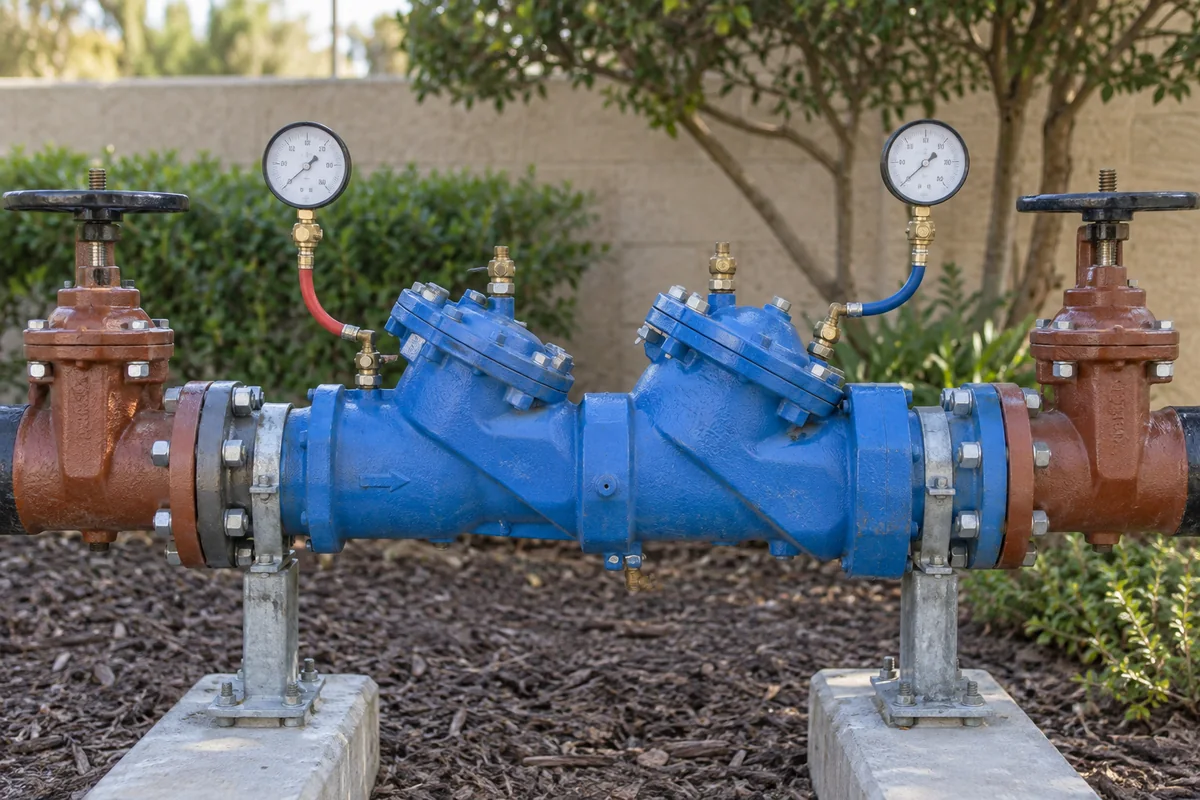
Hydraulic fire backflow testing
Measure how the fire backflow assembly affects available pressure under flow
Florida Fire Solutions provides Fire Backflow Pressure Loss Testing in West Palm Beach when a fire-protection system has a pressure or water-supply concern and the hydraulic loss across the fire backflow assembly needs to be evaluated under relevant operating conditions.
A fire backflow prevention assembly creates a measurable hydraulic loss as water moves through its checks, body, valves, and related components. The amount of loss depends on the actual assembly and flow condition, so diagnostic testing should evaluate the installed equipment rather than assume one universal pressure drop.
Call now to request fire backflow pressure loss testing for a West Palm Beach property.
For routine inspection and device testing rather than hydraulic loss investigation, see our annual fire backflow inspection service.
Hydraulic concerns
When fire backflow pressure loss may need investigation
The diagnostic service is appropriate when the question is not simply whether the fire backflow checks pass their certification test, but whether the assembly is contributing excessive or unexpected hydraulic loss to the fire-protection water supply.
Unexpected downstream pressure loss
If available pressure downstream of the fire backflow assembly is lower than expected when water is flowing, the device can be evaluated as one part of the overall hydraulic path.
Performance concern after system changes
Changes to a fire-protection system, water supply, fire backflow assembly, or surrounding piping can create a need to compare current hydraulic behavior with project information or manufacturer performance data.
Possible restriction through the assembly
Internal condition, a partially restricted component, an unsuitable assembly, or another issue in the fire backflow arrangement can contribute to greater loss than expected and may require further evaluation.
Pressure loss across the fire backflow assembly should be considered together with the rest of the water-supply path. A measured difference at the device does not by itself prove that every downstream pressure problem originates inside the assembly.
Diagnostic test scope
Evaluate the installed assembly under a relevant flow condition
The testing scope is built around the fire backflow assembly, the reported pressure concern, the available system information, and the flow condition relevant to the investigation.
- Identify the fire backflow assembly, size, manufacturer and model information when available, and the fire-protection system it serves.
- Review available water-supply information, previous test data, hydraulic information, inspection findings, or project documents relevant to the reported pressure concern.
- Establish the appropriate test arrangement and relevant flow condition for evaluating hydraulic loss across the installed fire backflow assembly.
- Record pressure observations on the appropriate sides of the assembly while documenting the associated flow condition used for the diagnostic evaluation.
- Compare the observed hydraulic behavior with available equipment information and system context to identify whether further fire backflow repair, cleaning, replacement, or broader supply investigation is indicated.
The service does not publish one acceptable pressure-drop number for every fire backflow preventer. Manufacturers publish different pressure-loss characteristics by assembly model, size, and flow, and the significance of the measured loss depends on the fire-protection system’s available water supply and required performance.
To investigate hydraulic loss across an installed fire backflow assembly, call for diagnostic testing.
Different fire backflow services
Pressure loss testing is not the same as fire backflow certification or simple strainer service
The same fire backflow assembly can be involved in several different service requests. The requested test should match the actual problem being investigated.
Fire backflow pressure loss testing
This page addresses the hydraulic pressure lost across the installed fire backflow assembly under the relevant flow condition and how that loss affects available fire-protection supply.
Fire backflow check-integrity testing
Routine or certification testing evaluates the internal fire backflow checks under the applicable device-test procedure. For recurring inspection and testing, use our annual fire backflow inspection service.
Fire backflow repair or strainer service
If diagnostic work identifies a restriction, fouled component, damaged check, or strainer condition, the corrective work becomes a repair scope. See our fire backflow preventer repair service for retained-device corrective work.
If the complete fire backflow assembly has been identified for replacement rather than diagnosis or component repair, see our Fire Backflow Preventer Replacement service.
Common questions
Questions about fire backflow pressure loss testing
What does fire backflow pressure loss testing measure?
The service evaluates the hydraulic pressure difference across the installed fire backflow assembly under a relevant flow condition. The result is considered with the assembly information and broader fire-protection water-supply context.
Is this the same as an annual fire backflow certification test?
No. Annual or certification testing evaluates the fire backflow device’s internal checks according to the applicable device-test procedure. Pressure loss testing investigates the hydraulic effect of the complete installed assembly under flow.
Is there one normal pressure-loss value for every fire backflow preventer?
No. Hydraulic loss varies with assembly model, size, configuration, and flow. Available manufacturer performance information and the actual fire-protection system conditions should be considered when interpreting the test.
Can a dirty strainer cause additional pressure loss?
A restriction in a strainer or another part of the fire backflow arrangement can contribute to hydraulic loss. If testing identifies a specific restriction, cleaning or repair is scoped as corrective work rather than treated as the pressure-loss test itself.
Does high pressure loss automatically mean the complete fire backflow assembly must be replaced?
No. The finding should be evaluated against the actual assembly and system. The cause may require component service, removal of a restriction, broader hydraulic investigation, or complete replacement depending on what the diagnostic work identifies.
What information helps before scheduling diagnostic testing?
Provide the West Palm Beach property location, clear photos and markings from the fire backflow assembly, any previous test or flow data, hydraulic information when available, and a description of the pressure or water-supply concern being investigated.
Request Fire Backflow Pressure Loss Testing in West Palm Beach
If the fire-protection system is losing more pressure than expected across the fire backflow assembly, contact Florida Fire Solutions to review the equipment, relevant flow condition, and diagnostic testing scope.
Or call directly (305) 707-3473