
Existing condominium fire sprinkler retrofit
Condo Fire Sprinkler Retrofit in Broward County
Florida Fire Solutions provides Condo Fire Sprinkler Retrofit in Broward County for an existing occupied condominium undertaking an approved retrofit, coordinating the association project around surveyed fire sprinkler routes, unit and common-area access, phased installation and the work required to add first-time fire sprinkler protection.
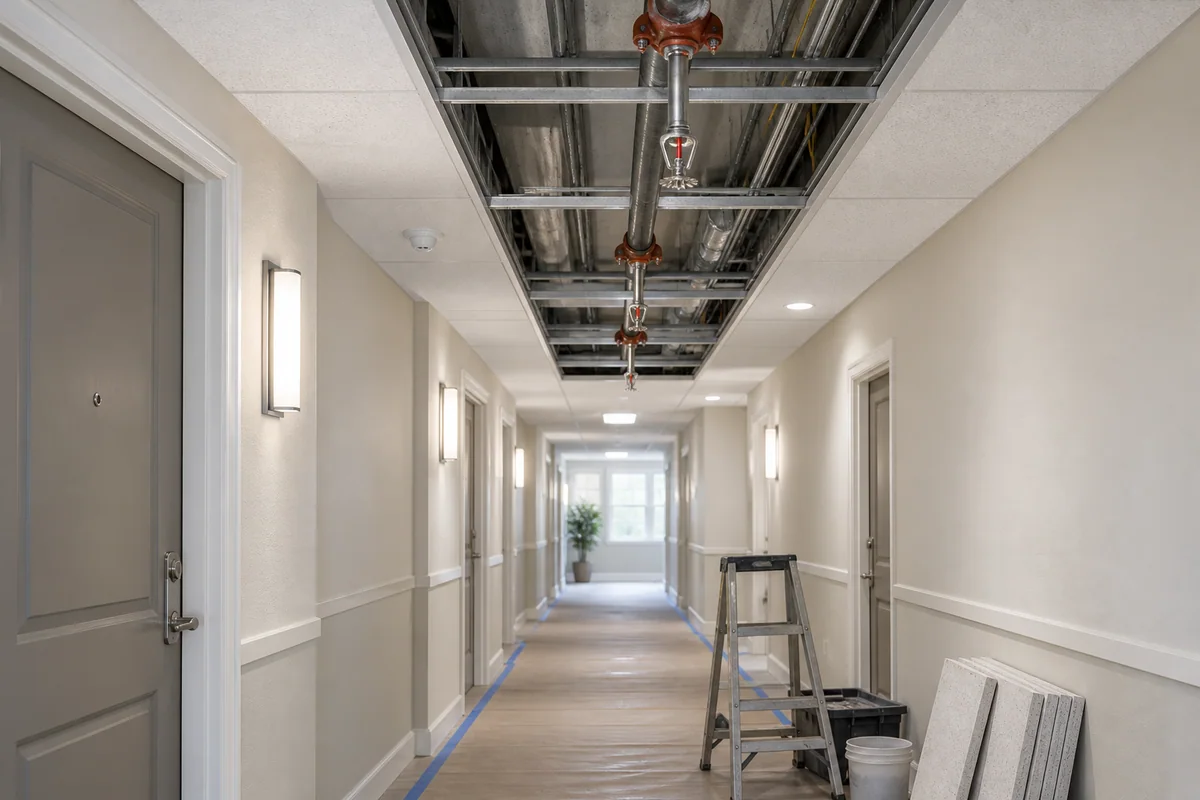
First-time fire sprinkler protection
Adding fire sprinkler protection to an existing occupied condominium
A condominium retrofit is different from replacing an existing fire sprinkler system or installing protection in an empty new building. The project has to introduce new fire sprinkler piping and protection into an existing property while accounting for the building layout, occupied units, common areas and the association’s approved project scope.
Florida Fire Solutions reviews the existing building conditions and coordinates the fire sprinkler retrofit around surveyed riser and branch-line routes, access requirements, installation phasing and the areas included in the project. Qualified design and performing trades are coordinated where the actual scope requires them. Call now to request a retrofit assessment for a Broward County condominium.
For the company’s broader fire sprinkler and fire-protection capabilities, see our fire protection services.
Retrofit scope
What an occupied condominium retrofit needs to address
The installation scope is developed around the approved retrofit and the existing building conditions. The objective is to create workable fire sprinkler routes and coverage while coordinating the construction impact across units and common areas.
Association project scope
The retrofit begins with the areas included in the association’s approved project so the field survey, routing and installation planning stay tied to the actual work being undertaken.
Existing-building survey
Available riser locations, corridors, shafts, ceilings, units and other existing conditions are reviewed before final routing assumptions are made.
Riser and branch-line routing
Proposed fire sprinkler mains, risers and branch routes are developed around the physical building so piping can reach the required protected areas through practical paths.
Unit access planning
Where work enters occupied condominium units, access has to be coordinated with residents or unit representatives so installation can proceed in an organized sequence.
Common-area coordination
Corridors, lobbies, service spaces and other shared areas can become important piping routes or work zones and are reviewed as part of the retrofit plan.
Phased installation
Larger occupied properties may require the work to be organized by floor, stack, wing, common area or another practical sequence based on the actual project and building access.
If the association already has drawings, a defined retrofit scope or building information, have it available for the initial review. Call now for a retrofit assessment.
Occupied-building coordination
Plan the work around residents, access and finished spaces
Installing new fire sprinkler protection in an occupied condominium introduces coordination issues that do not exist in an open-shell project. Access and routing decisions have to account for residents, finished interiors and the practical sequence of construction.
- Unit entry: identify which units require access and how entry will be coordinated for survey and installation work.
- Common areas: review corridors, stair approaches, service rooms and other shared spaces that may affect routing or staging.
- Ceiling and wall conditions: identify existing finishes and accessible construction paths that affect how new fire sprinkler piping can be routed.
- Installation sequence: organize the work into manageable areas so multiple units or floors are not opened unnecessarily at the same time.
- Resident communication: give the association a defined work sequence it can use when coordinating access with occupants.
- Supporting work: identify project-specific design, access, finish or other qualified-trade coordination required by the actual retrofit scope.
Retrofit versus upgrading an existing fire sprinkler system
A property that already has fire sprinkler protection but needs modifications for aging equipment, changed hazards, storage or system deficiencies is a different project. Our fire sprinkler system upgrade service addresses work on an existing fire sprinkler system. This page is specifically for adding first-time fire sprinkler protection to an existing condominium under an approved retrofit project.
Retrofit process
From association scope to phased field installation
The retrofit is organized around the existing property so the surveyed building conditions, proposed piping routes and occupied-building access plan stay connected throughout the project.
1. Review the association’s project
Available drawings, property information and the areas included in the approved retrofit are reviewed to establish the starting scope.
2. Survey existing conditions
The building is reviewed for potential riser, main and branch-line routes along with the occupied areas that will require access.
3. Develop the retrofit layout
Qualified design coordination is incorporated where required so the proposed fire sprinkler arrangement reflects the existing building and approved project scope.
4. Plan access and phasing
Unit access, common-area work and installation sequencing are organized around the actual property rather than treating the building as an unoccupied construction site.
5. Install the fire sprinkler protection
The new fire sprinkler piping and protection are installed through the defined retrofit areas, with qualified performing trades coordinated as the project requires.
6. Complete project testing and closeout
After installation and required supporting work are complete, the applicable testing and project documentation are coordinated for the finished retrofit scope.
For a Broward County condominium undertaking an approved fire sprinkler retrofit, Call now to discuss the building, project scope and access conditions.
Common questions
Condo fire sprinkler retrofit questions
Is this service for a condominium that already has a fire sprinkler system?
This page is specifically for an existing condominium undertaking a project to add first-time fire sprinkler protection in the areas included in the approved retrofit. A building that already has fire sprinkler protection and needs modifications to that existing system is a different scope.
What information should the association provide for a retrofit assessment?
Useful starting information includes the Broward County property address, available building or retrofit drawings, the areas included in the project, known riser or water-supply information, floor and unit layouts, and any documents that define the approved project scope.
Can fire sprinkler work be coordinated while residents remain in the building?
Occupied-building coordination is a central part of this service. The actual phasing depends on the building, approved scope and access conditions, but unit entry, common areas and installation sequencing should be addressed before field work begins.
Does every condominium in Broward County need this retrofit?
This page does not assume that every condominium has the same retrofit requirement. It is for associations and properties where a fire sprinkler retrofit has already been identified and an approved project is being undertaken.
Why is a building survey important before installation?
An occupied existing building has established walls, ceilings, corridors, units and service spaces that affect routing and access. Surveying those conditions helps define practical riser and branch-line paths and reduces reliance on assumptions made from a floor plan alone.
Request a condominium fire sprinkler retrofit assessment
If a Broward County condominium is undertaking an approved retrofit to add fire sprinkler protection, contact Florida Fire Solutions to review the building, project scope, proposed routes and occupied-property access requirements.
Or call directly (305) 707-3473