
Controlled dry-system trip testing · Broward County
Dry-Pipe Fire Sprinkler Trip Testing in Broward County
Florida Fire Solutions provides Dry-Pipe Fire Sprinkler Trip Testing in Broward County with the test scope matched to the installed valve, system condition and project requirements. We coordinate the impairment, controlled trip test, discharge, recorded observations and system restoration as one service. Call now to review the system and testing scope.
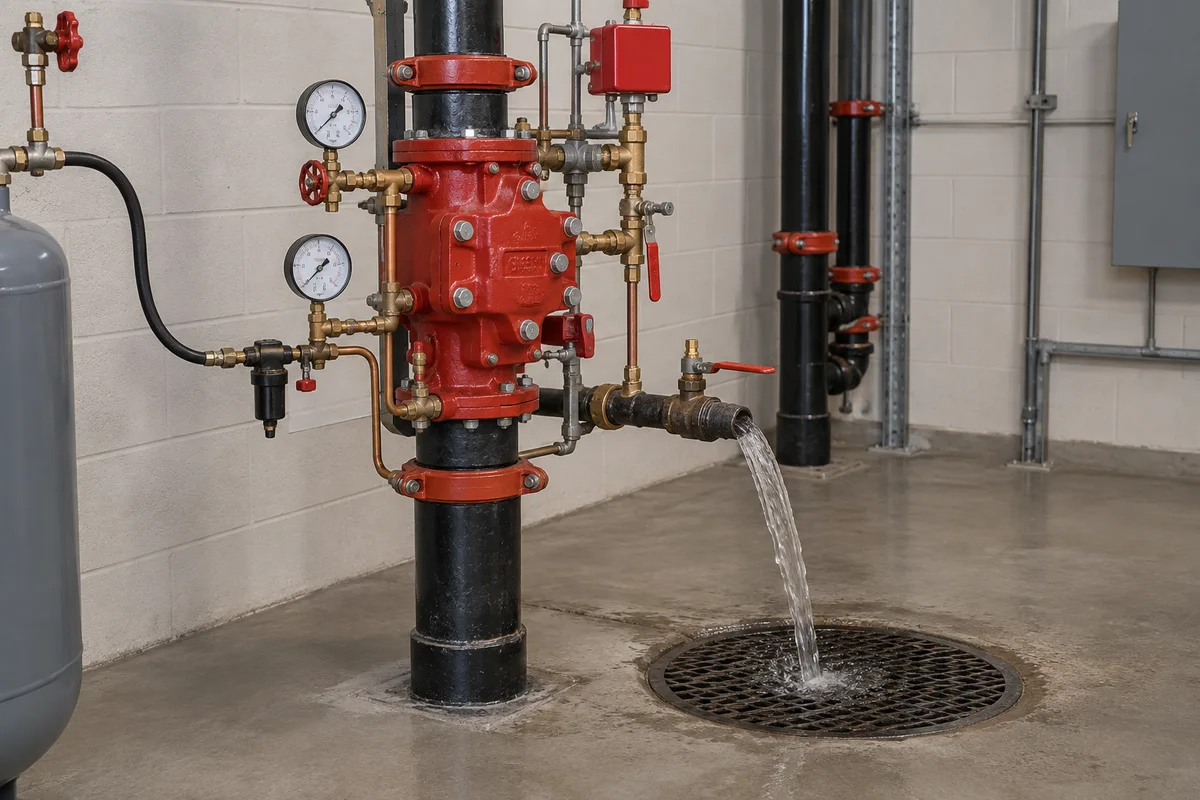
Dry-valve operational testing
Trip the dry-pipe valve under a defined test scope and document what happens
A dry-pipe trip test is controlled operational testing of the installed dry valve and connected system. The test scope should establish which valve is being tested, whether the planned test is partial-flow or full-flow, where water will discharge, what observations will be recorded and how the system will be restored afterward.
Florida Fire Solutions reviews the valve manufacturer and model, trim arrangement, air or nitrogen supply, drains, remote test connection, available prior records and property conditions before the test is scheduled. The procedure then follows the actual equipment and applicable project requirements rather than one generic dry-valve sequence.
For broader dry-system inspection and service needs, see our Dry Pipe Fire Sprinkler System service and our fire protection services.
Test scope
Define whether the job calls for partial-flow or full-flow trip testing
Manufacturer instructions distinguish partial operational testing from full-flow testing because they place different demands on the dry sprinkler system. The correct approach depends on the installed valve, required test, current system condition and authority or project requirements.
Partial-flow trip test
A partial-flow test can be used to confirm operation of the dry valve while limiting the amount of water admitted into the system. It verifies specific operating functions but does not represent the same system condition as a full-flow test.
Full-flow trip test
A full-flow test allows the dry system to operate with full water delivery into the sprinkler piping. Because the piping becomes wet, drainage, access and restoration requirements are more extensive and should be planned before the test begins.
Installed valve and trim
The dry valve model, trim arrangement, actuator or accelerator where present, gauges and air-maintenance equipment are identified before the manufacturer’s test and reset information is applied.
Starting conditions
Available supply and system-pressure information, valve condition and current air or nitrogen arrangement are documented as part of the test record where relevant to the selected procedure.
Test observations
The record can include valve operation, observed system pressures, water delivery or discharge observations, alarm indications and other information required by the actual test scope or responsible authority.
Model-specific procedure
Trip and reset procedures are taken from the applicable valve information and current project requirements. We do not apply one operating sequence or one pass threshold to every dry sprinkler valve.
If the required trip-test scope is already identified, Call now with the valve information and property details.
Test-day planning
Plan discharge, access, impairment and monitoring before the valve is tripped
Trip testing can release substantial water and can change the normal operating condition of the dry sprinkler system. A useful service visit starts by confirming where that water will go and who needs to participate while the system is impaired.
- Discharge route: review the test connection, main drain or other applicable discharge point and the site’s ability to receive the planned test flow without creating avoidable property damage.
- Access: confirm access to the dry valve, trim, drains, remote test point and other equipment needed for the selected test.
- Impairment coordination: identify the affected sprinkler system or area and coordinate the temporary out-of-service condition with the property representative.
- Monitoring coordination: where testing creates sprinkler alarm or supervisory signals, coordinate the building’s responsible alarm or monitoring provider. Fire-alarm panel repair or programming is not included by assumption.
- Drainage after testing: full-flow work may require draining water from system piping and applicable low points before the dry system can be restored.
These details are especially important when the remote test location is outdoors, above occupied space or far from the valve room. The testing proposal should state the planned test boundary and any access or drainage responsibility that must be handled before the service date.
Results and restoration
Record the test observations and return the dry system to its intended operating condition
The result is more useful when the test record shows what was tested and what happened, rather than reducing the visit to a generic pass/fail statement. The actual observations depend on the selected partial- or full-flow procedure and the equipment installed.
Valve operation
Document whether the dry valve operated during the selected test and record the applicable system observations requested by the procedure or project.
Water delivery
Where the test scope includes water reaching a remote test point, record the observed delivery information without applying a universal acceptance threshold that may not match the system or authority requirement.
Alarm observations
Record sprinkler-side alarm or pressure-switch response as applicable and coordinate confirmation of downstream monitoring signals with the provider responsible for that equipment.
Abnormal findings
Slow operation, leakage, trim problems, drainage issues or other deficiencies discovered during testing are documented separately so corrective work can be scoped from the actual finding.
Drain and reset
After the test, the affected piping is drained as required and the dry valve, trim and air or nitrogen supply are restored according to the installed equipment and manufacturer information.
Return-to-service record
The completed service record can document the test performed, key observations, restoration status and any separate repairs recommended from the findings.
If testing identifies a failed or unserviceable dry valve rather than a testing-only issue, our Dry Pipe Fire Sprinkler Valve Replacement in Broward County service addresses the equipment replacement. If the system instead repeatedly loses supervisory air, see our Dry Fire Sprinkler Air Leak Repair in Broward County service.
Broward County coordination
Confirm the responsible fire authority when the trip test is tied to a correction or permit
Broward County’s current local fire-code amendments apply in incorporated and unincorporated areas and define the authority having jurisdiction as the organization or office responsible for enforcement. Broward BORA also maintains the current list of Fire Code Officials for the county’s jurisdictions.
When dry-pipe trip testing is being performed for a failed inspection, permit, correction or other reviewed project, provide the exact property address and project record before scheduling. That identifies the responsible local fire authority and helps determine whether a specific test scope, witness, documentation or closeout step applies.
BORA currently recommends starting code questions with the local building or fire department. Florida Fire Solutions therefore plans the test around the actual dry system, manufacturer information and applicable local project requirements instead of using a single countywide test threshold.
Request dry-pipe fire sprinkler trip testing
Send Florida Fire Solutions the Broward County property address, dry-valve photos, manufacturer information and available test records. We can define the trip-test scope, discharge and impairment plan, recorded results and restoration requirements for the installed system.
Or call directly (305) 707-3473