
Fire Protection Pressure-Zone Regulation Service
Fire Protection Master PRV Service in Miami
Florida Fire Solutions provides Fire Protection Master PRV Service in Miami for main or pressure-zone pressure-reducing valve (PRV) stations serving fire sprinkler and fire standpipe supplies. We identify the installed station and model, review available inlet, outlet and flow conditions, investigate supported pilot and main-valve faults, and define qualified service and verification. Call now to request a station review.
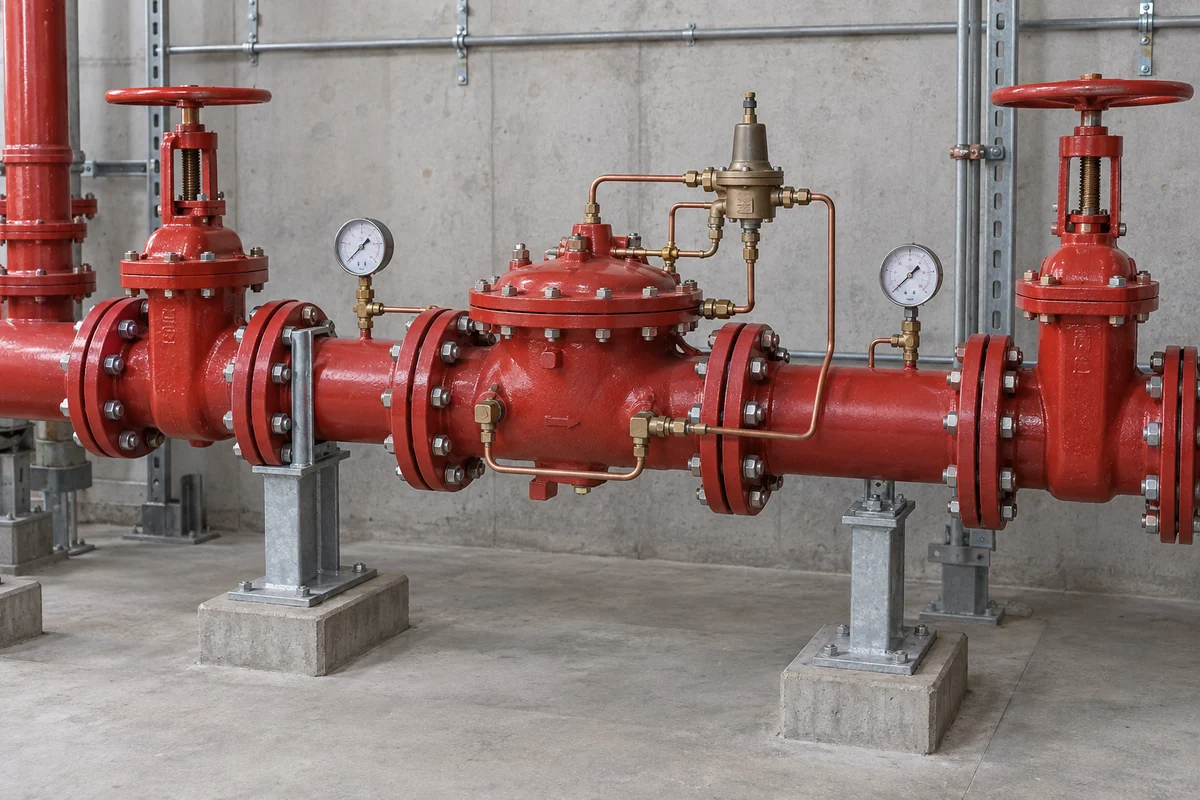
Station-level pressure regulation
Identify the fire protection master pressure-reducing valve station before servicing it
A main or pressure-zone PRV station regulates pressure for a broader fire protection supply than an individual hose-outlet pressure-reducing valve. Florida Fire Solutions first identifies the actual station, valve model, connected fire sprinkler or fire standpipe supply, control arrangement and reported regulation problem before defining service.
A master or zone pressure-reducing valve controls downstream pressure, while persistent leakage from a separate sprinkler relief component warrants focused diagnosis; see our fire sprinkler pressure relief valve service in Broward County.
The review can use available design information, prior test records, valve nameplate data, inlet and outlet pressure information, measured flow conditions and visible station components to determine what requires qualified investigation. Call now if a fire protection master or pressure-zone PRV station in Miami is not maintaining the expected regulated condition.
Regulation conditions
Review inlet pressure, regulated outlet pressure and flow in the context of the installed station
A master pressure-reducing station should be evaluated from the conditions it is intended to control. One pressure reading by itself does not identify whether the problem is in the PRV station, upstream supply, downstream demand or another part of the fire protection system.
Inlet conditions
Review available upstream pressure information and the condition being supplied to the main pressure-reducing valve so the regulating problem is not evaluated without its inlet reference.
Outlet regulation
Compare available downstream pressure observations with the station’s documented design or intended operating information rather than applying an arbitrary universal setting.
Flow-dependent behavior
Evaluate relevant pressure behavior together with available flow conditions because a station can respond differently as system demand changes.
Current manufacturer engineering information for pilot-operated fire protection PRVs describes main valves that modulate to maintain downstream pressure as inlet pressure or flow changes. The exact operating range, configuration and verification method still depend on the installed valve and fire protection design.
Model-specific diagnosis
Investigate the pilot system, control tubing, strainers and main valve where the installed PRV uses them
Pilot-operated master PRV stations can contain several connected components that influence regulation. The service scope follows the actual manufacturer configuration rather than assuming every pressure-reducing station contains identical trim.
Pressure-reducing pilot
Evaluate the model-specific pilot control when supported by the symptoms and manufacturer information, including whether the pilot is responding correctly to downstream pressure conditions.
Sensing and control tubing
Inspect accessible control tubing, fittings and sensing connections for supported leakage, damage, blockage or other conditions that can interfere with the pilot-operated regulation path.
Strainers and restrictions
Where included in the installed station, evaluate pilot-system strainers or restriction components for conditions that can affect control-water movement and stable valve response.
Main diaphragm valve
Review the main valve assembly when findings point to diaphragm, disc, seat, stem or other manufacturer-specific internal components affecting opening, closing or regulation.
Cla-Val’s 90-21 fire protection pressure-reducing valve is one manufacturer example of a pilot-operated station using a main diaphragm valve, pressure-reducing pilot, restriction assembly and flow-clean strainer. Its current engineering and maintenance documents also identify control-system and internal main-valve faults that can affect regulation. Other manufacturers and station configurations can differ.
Qualified corrective service
Define the master PRV service from the confirmed station fault
The correct next step can range from model-specific maintenance of serviceable control components to repair of the pilot system or main valve, or a separate replacement scope when the installed equipment is no longer serviceable.
- Confirm the fire protection PRV station manufacturer, model, configuration and affected pressure zone.
- Review the supported regulation fault against available inlet, outlet, flow and design information.
- Identify manufacturer-specific pilot, control-tubing, strainer or main-valve components requiring qualified service where applicable.
- Coordinate the affected fire protection impairment and access before corrective work that requires the station to be taken out of service.
Manufacturer procedures govern any permitted adjustment, disassembly, repair or replacement of pressure-regulating components. Florida Fire Solutions does not assume one adjustment method, one station layout or one pressure value for every master PRV installation.
A main fire protection PRV station is also different from a fire pump pressure relief valve. If the confirmed component is a leaking or malfunctioning pump-discharge relief valve, see our fire pump relief valve repair in Broward County service.
Call now when a main or pressure-zone fire protection PRV station needs model-specific evaluation and corrective service.
Return to regulated service
Verify pressure regulation after master PRV service
After qualified service or repair, the station should be evaluated under relevant operating conditions to confirm that the serviced pressure-reducing valve responds consistently with the applicable design and manufacturer information.
Post-service verification can include appropriate inlet and outlet pressure observations, leakage checks, pilot and main-valve response, and relevant flowing conditions needed to assess the completed work. The exact verification follows the installed station and corrective scope rather than one universal test procedure.
General fire standpipe flow testing answers a broader system-delivery question. If the property needs water-delivery measurements at selected fire standpipe outlets rather than service of the main pressure-reducing station, see standpipe flow testing in Miami.
Main or pressure-zone fire protection PRV not regulating as expected? Request a qualified station review in Miami.
Call (305) 707-3473Common questions
Fire protection master PRV service questions
What does Fire Protection Master PRV Service in Miami cover?
The service focuses on a main or pressure-zone pressure-reducing valve station serving a fire sprinkler or fire standpipe supply. It includes identifying the installed station, reviewing relevant pressure and flow information, investigating supported regulation faults and defining qualified service and verification.
Is a master fire protection PRV the same as a fire standpipe hose-outlet PRV?
No. An individual hose-outlet PRV regulates one fire standpipe outlet. A master or pressure-zone PRV station regulates a broader portion of the fire protection supply and requires a separate station-level evaluation.
What parts of a pilot-operated master PRV can cause regulation problems?
The answer depends on the installed manufacturer and model. Where applicable, investigation can involve the pressure-reducing pilot, sensing or control tubing, strainers or restriction components, fittings and the main diaphragm valve assembly.
Can the master PRV setting be adjusted during service?
Only when the installed valve design, manufacturer instructions and supported system conditions permit qualified adjustment. Adjustment procedures and allowable ranges vary by equipment, so one universal setting method is not assumed.
Is a master PRV the same as a fire pump pressure relief valve?
No. A master pressure-reducing valve regulates downstream fire protection pressure. A fire pump pressure relief valve is associated with relieving excess pressure from the pump discharge arrangement. They serve different functions and require different corrective scopes.
How is a fire protection master PRV checked after service?
Qualified verification follows the installed station, manufacturer information and work completed. It can include leakage checks, relevant inlet and outlet pressure observations, pilot and main-valve response and appropriate flowing conditions used to evaluate restored regulation.
Request Fire Protection Master PRV Service in Miami
If a main or pressure-zone pressure-reducing valve station serving a fire sprinkler or fire standpipe supply is not regulating as expected, contact Florida Fire Solutions to review the equipment, available system data and qualified service scope.
Or call directly (305) 707-3473