
Stuffing-box packing service for existing fire pumps
Fire Pump Packing Replacement in Miami Beach
Florida Fire Solutions provides fire pump packing replacement in Miami Beach for packed fire pumps with excessive stuffing-box leakage, worn packing or gland-area conditions that need equipment-specific repair and verification.
Confirm the leak source before replacing packing
Separate stuffing-box leakage from other fire pump leaks
Florida Fire Solutions provides Fire Pump Packing Replacement in Miami Beach for condo, hotel and commercial pump rooms where a packed fire pump has excessive leakage or a confirmed packing-related condition.
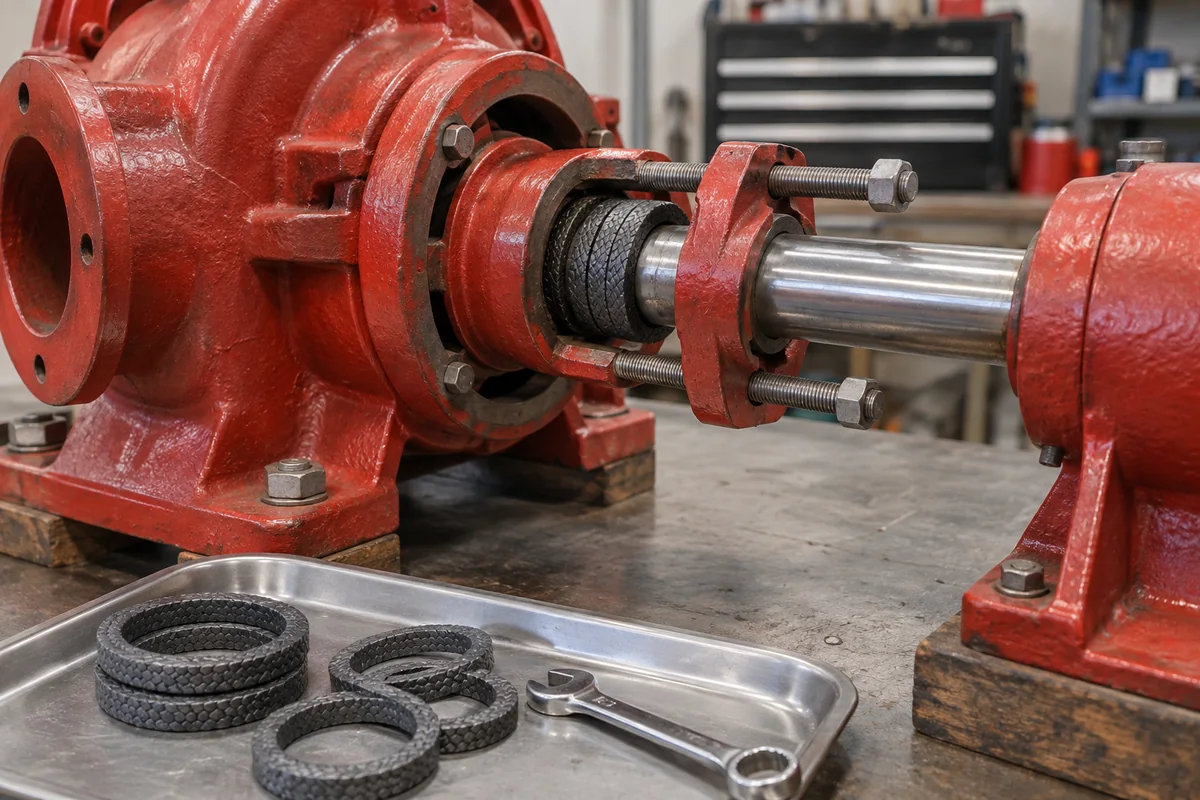
Packing sits around the pump shaft in the stuffing box and is retained by the gland or gland follower. Packed pumps normally require controlled leakage at that area for lubrication and cooling. The repair question is not whether the stuffing box is completely dry; it is whether the leakage and component condition are appropriate for that specific pump.
Water near a fire pump can also come from piping, fittings, drains, seals or another component. Before packing replacement is quoted, the leak location should be confirmed and the gland, shaft or sleeve area should be reviewed so a different problem is not treated as a packing failure.
Call now to describe the leakage and request a packing repair quote. For broader inspection, testing, maintenance or troubleshooting needs, see our Fire Pump Services in Miami Beach.
Stuffing-box and gland assessment
Check the packing area before deciding what the repair needs
Excessive stuffing-box leakage can involve worn packing, gland condition, shaft-sleeve wear or another pump condition. The repair scope should follow the actual equipment condition rather than assuming new packing alone will correct every leak.
Leak source and operating condition
Confirm that the water is coming from the packed stuffing-box area and note whether the condition appears only while the pump is operating or is also present while the equipment is idle.
Gland and follower condition
Review the gland or follower for uneven position, damage, corrosion or another visible condition that can affect how the packing is retained around the shaft.
Shaft or sleeve condition
Inspect the accessible shaft-sleeve area for wear, scoring or damage that can contribute to persistent leakage. If the sleeve condition is part of the problem, that work should be identified separately from packing replacement alone.
Pentair Aurora fire-pump manuals for packed pumps warn against tightening the gland until all leakage stops because some leakage is needed to cool, flush and lubricate the packing. The same manufacturer guidance notes that leakage that cannot be controlled by normal gland condition can point to packing and/or shaft-sleeve wear. Exact leakage expectations are equipment-specific and should follow the applicable pump information rather than one universal number.
Equipment-specific packing scope
Match the packing service to the installed fire pump
Packing replacement should use the installed pump information, the stuffing-box configuration and the condition found at the site. It should not be treated as a generic material swap across every fire pump model.
- Pump identification: confirm the fire pump make, model and available manufacturer information before defining the packing service.
- Stuffing-box configuration: identify the gland or follower arrangement and any manufacturer-specific packing-box components relevant to the installed pump.
- Packing material and fit: use packing suitable for the pump and stuffing-box arrangement rather than substituting an unverified material or size.
- Shaft-sleeve findings: document sleeve wear or damage that may require separate repair or replacement before the new packing can perform as intended.
- Related leak sources: keep piping, fittings, drains, mechanical seals or other leak points outside the packing box identified as separate repair items.
- Access and impairment planning: coordinate the building contact, pump-room access and any required fire protection impairment before the pump is taken out of service for packing work.
A pump that uses a mechanical seal has a different sealing arrangement and is not a packing-replacement job. Likewise, leakage caused by a damaged sleeve, casing condition or connected piping should be scoped around the confirmed component instead of being hidden inside a packing quote.
Call now if you have the pump model or prior repair record and want to review whether the leak is appropriate for packing replacement.
Post-work operating checks
Check the stuffing box after the new packing is installed
Packing replacement should end with equipment-specific operating checks and documentation. The goal is to confirm that the stuffing-box condition is appropriate for the installed pump without chasing a universal zero-leakage result.
Gland position and packing condition
Confirm the gland or follower is secure and even for the installed pump, with no obvious binding, damage or abnormal condition at the stuffing box after reassembly.
Observe operating leakage
Operate and observe the packed stuffing box using the applicable manufacturer information. The objective is controlled lubrication and cooling at the packing area, not an unsupported promise that every packed pump should run completely dry.
Document remaining findings
Record the packing service, visible gland and sleeve condition, operating observations and any separate pump, piping or seal issue that remains after the packing work.
Pentair Aurora service guidance for fire pumps specifically cautions that over-tight packing can damage the packing and shaft sleeve. That manufacturer guidance supports a controlled, model-specific post-work check rather than a customer instruction to keep tightening the gland until leakage disappears.
If the assessment shows that the leak is part of a broader fire sprinkler repair condition rather than the pump stuffing box, use Fire Sprinkler Repair in Miami Beach for the separate system repair scope.
Common questions
Questions before scheduling fire pump packing replacement
Should a packed fire pump stuffing box be completely dry?
Not as a universal rule. Manufacturer guidance for packed pumps can require controlled leakage for cooling and lubrication. The acceptable condition depends on the pump and packing arrangement, so the goal is not simply to eliminate every visible drop.
How do I know whether the leak is coming from the packing?
The leak source should be confirmed at the pump. Water can come from the stuffing box, piping, fittings, drains, a mechanical seal or another component. The service assessment identifies the source before packing replacement is selected.
Can new packing fix a worn shaft sleeve?
Not necessarily. If the shaft sleeve is worn, scored or damaged, packing alone may not correct the leakage. Sleeve condition should be documented and separately addressed when it is part of the problem.
Is a mechanical-seal leak the same repair?
No. Mechanical seals and packed stuffing boxes are different sealing arrangements. A pump with a mechanical-seal problem needs the seal and related components evaluated rather than being treated as a packing-replacement job.
Should building staff tighten the gland to stop the leak before the visit?
No DIY gland adjustment is needed for scheduling. Provide the pump information, leak description and safe exterior photos if available. Packing and gland work should be handled as part of the professional service scope using the applicable pump information.
What is checked after packing replacement?
The closeout should include the gland and stuffing-box condition, the pump’s operating leakage using applicable manufacturer guidance, and documentation of any separate sleeve, piping or pump condition that remains after the packing work.
Request fire pump packing replacement in Miami Beach
Send the pump information, leak description, prior service records and pump-room access details. Florida Fire Solutions can confirm the stuffing-box condition, define the packing scope and document post-work operating checks.
Or call directly (305) 707-3473