
Licensed Fire Sprinkler Contractor · Miami, Florida
Fire Sprinkler Internal Pipe Corrosion Inspection in Miami
Florida Fire Solutions provides fire sprinkler internal pipe corrosion inspection in Miami for buildings with suspected rust, pinhole leaks or buildup inside sprinkler piping. We examine selected pipe locations and document the findings. Call now to request an inspection.
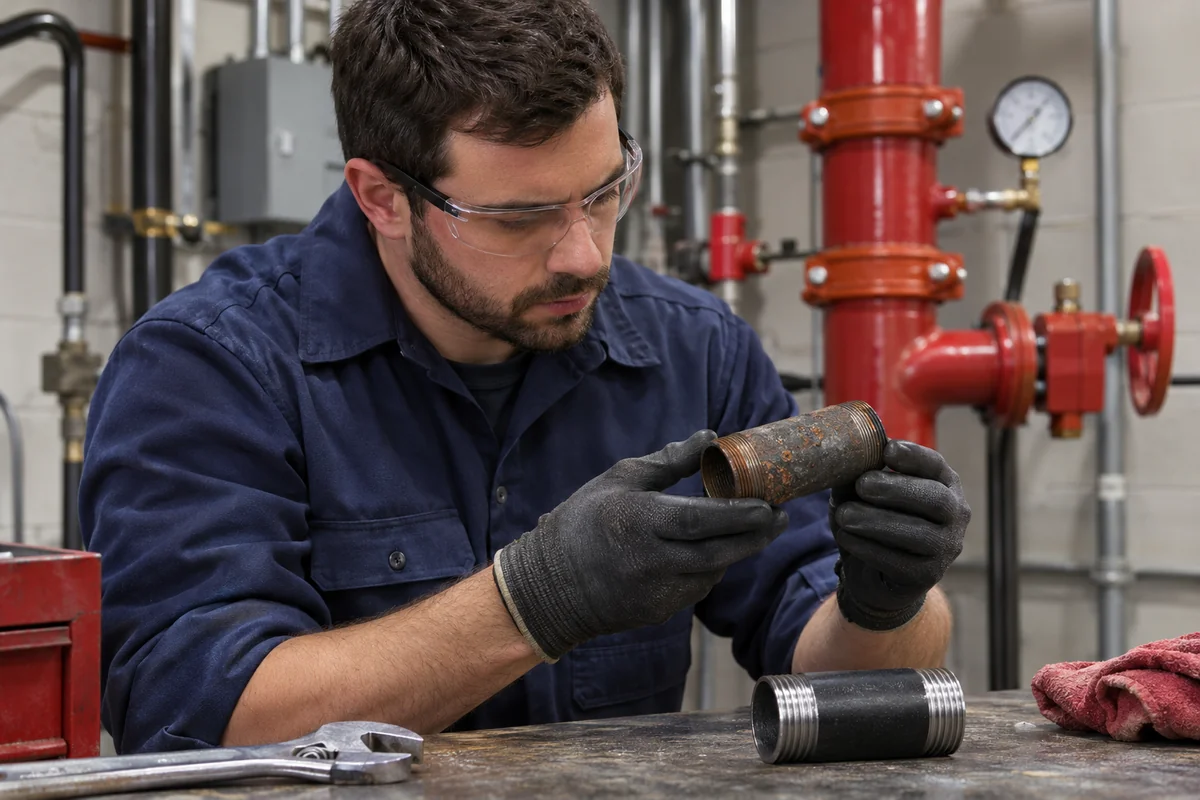
Inside the sprinkler piping
What We Check for Corrosion
We inspect selected areas inside fire sprinkler piping for rust, scale, pitting and deposits. These conditions can damage the pipe wall or leave material that may restrict water flow. The goal is to find out what is present and what work the findings support.
Pinhole leaks, solid particles discharged during testing or a prior inspection finding can help identify where to start. If the material suggests a blockage, the system may need a separate fire sprinkler obstruction investigation. Rust alone does not mean every pipe must be replaced.
Inspection and documentation
How We Inspect the Piping
We review the reported problem and the system layout before opening any piping. Internal examination requires planned access and may require part of the sprinkler system to be taken out of service. We coordinate the affected area and required impairment procedures with building management.
For work inside the City of Miami, repairs that modify a sprinkler system may require a standalone fire permit reviewed by the City’s Fire Prevention Bureau. If our findings lead to a repair proposal, we explain the applicable permit and follow-up steps. Our inspection report does not replace an approval from the fire authority.
Review the History
We review reported leak locations, prior pipe repairs and available inspection findings to identify the relevant parts of the sprinkler system.
Examine Selected Pipe Locations
We inspect the agreed accessible pipe interiors for deposits, corrosion and pitting. Examining selected locations does not establish the condition of every pipe in the building.
Document the Next Step
We record the locations and conditions examined. If pipe replacement, further investigation or flushing is needed, we discuss that work separately.
- Have the latest inspection report and any records of recurring leaks or previous pipe replacements ready.
- Arrange access to the sprinkler riser, control valves and areas where piping may need to be examined.
- Identify a building representative who can coordinate required notices and temporary protection during an impairment.
If your property is due for a routine internal assessment rather than follow-up on suspected corrosion, see our separate NFPA 25 five-year internal inspection service.
Common questions
Internal Pipe Corrosion Questions
Can an annual inspection find corrosion inside a sprinkler pipe?
An annual inspection checks accessible system components and may uncover clues such as leaks or debris during testing. Seeing inside a pipe requires a separate internal examination.
Will the sprinkler system need to be shut down?
Opening a pipe typically requires isolating and draining the affected section. We review the sprinkler layout with management so required notices, temporary safety measures and return-to-service checks can be arranged.
Does dark water mean the piping has MIC corrosion?
No. Dark or rusty water alone cannot confirm microbiologically influenced corrosion (MIC). We document the condition found and explain whether more focused testing or investigation is warranted.
Does finding corrosion mean every pipe must be replaced?
No. The next step depends on how much damage or buildup is found and where it is located. A small affected area may need a limited repair; broader findings may call for more investigation before a replacement scope can be set.
Is this the same as a five-year internal assessment?
Not necessarily. This inspection responds to a specific concern about internal corrosion. A scheduled five-year NFPA 25 internal assessment has its own scope. We can review your records and explain which service is appropriate.
Request a Fire Sprinkler Corrosion Inspection
Tell us the Miami property address, the affected pipe location and whether you have photos or a prior report. We can discuss the internal inspection and what access will be needed.
Or call directly (305) 707-3473